Aravalli Hills News: Crisis, Courts & Conservation
Contents
- 1 What Are the Aravalli Hills? A Quick Overview
- 2 The Big Aravalli Hills News: The Supreme Court’s November 2025 Ruling
- 3 Why the November 2025 Judgment Sparked Controversy
- 4 The Supreme Court Stays Its Own Order: December 2025
- 5 The Deeper Threats Facing the Aravalli Hills
- 6 The Aravalli Green Wall Initiative: A Ray of Hope in Aravalli Hills News
- 7 Biodiversity at Stake: The Wildlife Dimension of Aravalli Hills News
- 8 Citizen Voices and the People’s Movement
- 9 What Google Trends Tell Us About Aravalli Hills News
- 10 What the Experts Say About the Future of the Aravalli Hills
- 11 Key LSI Keywords and Concepts Covered in This Article
- 12 Conclusion: Why Staying Updated on Aravalli Hills News Matters
What Are the Aravalli Hills? A Quick Overview
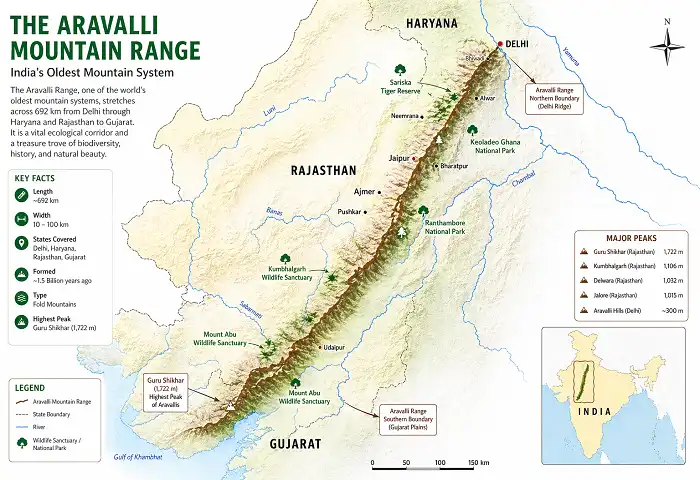
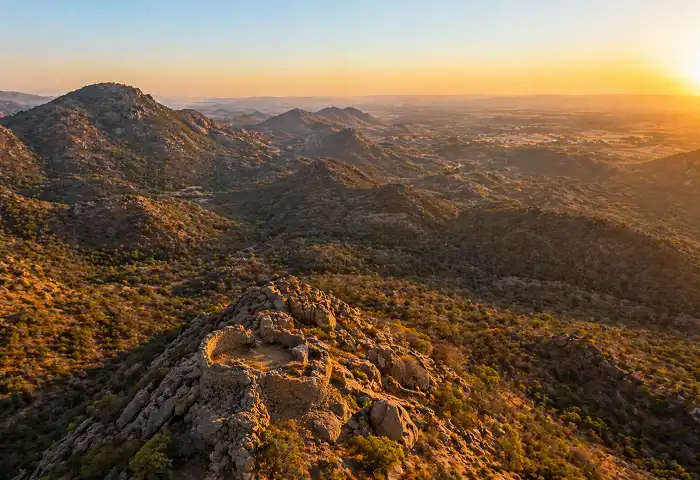
Before diving into the latest Aravalli hills news, it helps to understand what makes this range so important. The Aravalli hills stretch approximately 650 to 800 kilometres from the northern fringes of Delhi southward through Haryana and Rajasthan, ending in the Palanpur region of Gujarat. They are widely considered one of the oldest fold-mountain belts on the planet, dating back nearly two billion years. Guru Shikhar in Mount Abu, Rajasthan, stands as the highest peak of the range at roughly 1,722 metres above sea level.
For all their ancient grandeur, the Aravalli hills are not towering Himalayan giants. Much of the range consists of low, weathered ridges and rocky hillocks that can appear deceptively modest. But beneath that humble exterior lies a set of ecological functions so vital that geologists and conservationists often describe the Aravalli hills as the “lifeline of northwestern India.” They act as a natural barrier preventing the Thar Desert from marching eastward into the fertile Indo-Gangetic plains. They recharge groundwater aquifers that supply water to more than 30 million people, including large portions of Delhi. Rivers such as the Chambal, the Sabarmati, and the Luni owe their sustenance, at least in part, to the watershed dynamics of the Aravalli hills.
The range supports 22 wildlife sanctuaries and three tiger reserves. It harbours species as diverse as leopards, Indian wolves, sloth bears, and the critically endangered Great Indian Bustard. Its dry deciduous forests and grasslands host a remarkable blend of Saharan, Peninsular, and Oriental biodiversity. In short, when Aravalli hills news involves environmental degradation, the stakes are not merely local. They are national, if not planetary.
The Big Aravalli Hills News: The Supreme Court’s November 2025 Ruling
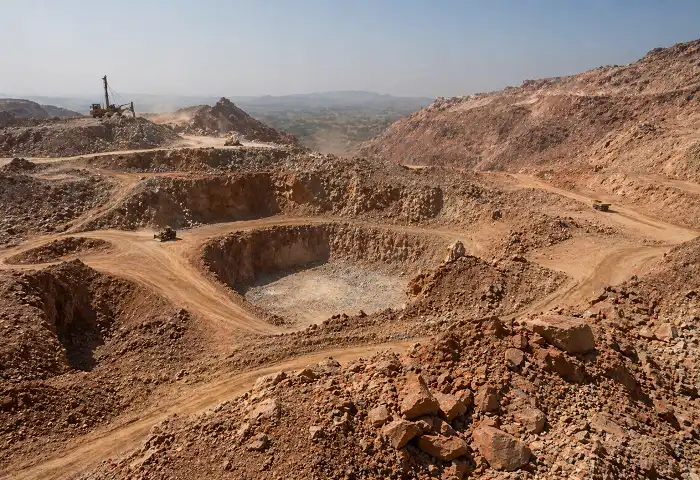
The single most consequential piece of recent Aravalli hills news came on November 20, 2025, when the Supreme Court of India delivered a landmark judgment that adopted a uniform definition for the Aravalli hills and ranges. The ruling emerged after years of legal battles, inconsistent state-level definitions, rampant illegal mining, and growing public outrage over the destruction of the range.
The Court accepted the recommendations of a high-level committee constituted under the Ministry of Environment, Forest and Climate Change (MoEF&CC). This committee included the Secretary of the MoEF&CC at its head, as well as forest department secretaries from Delhi, Haryana, Rajasthan, and Gujarat, and representatives from the Forest Survey of India (FSI), the Geological Survey of India (GSI), and the Central Empowered Committee (CEC).
The definition the Court adopted is straightforward in technical terms: any landform located in the Aravalli districts that rises 100 metres or more above the local relief is classified as an Aravalli Hill. Furthermore, two or more such Aravalli Hills located within 500 metres of each other are to be treated as a single Aravalli Range, with the entire intervening area included in the protection zone.
Alongside this definitional clarity, the November 2025 ruling also imposed an interim moratorium on all new mining leases across the Aravalli region and directed the preparation of a Management Plan for Sustainable Mining (MPSM) through the Indian Council of Forestry Research and Education (ICFRE). Mining in core or inviolate areas — defined as protected areas, tiger reserves, eco-sensitive zones, wetlands, and CAMPA plantation lands — was outright prohibited.
For those tracking Aravalli hills news, the ruling initially seemed like a major victory for conservationists. A uniform definition across four states would close the regulatory loopholes that had allowed illegal mining to flourish for decades. Prior to this ruling, only Rajasthan had a formally established definition for regulating mining in the Aravalli region, dating back to a state government committee report from 2002 and formally adopted on January 9, 2006. In Haryana and other states, the absence of a clear definition had created a grey zone where mining operators exploited the ambiguity freely.
Why the November 2025 Judgment Sparked Controversy
The latest Aravalli hills news, however, quickly took a complicated turn. Even as the ink dried on the November 20 judgment, geologists, ecologists, and citizen activists began voicing alarm. Their core concern: the 100-metre elevation threshold, while clear and enforceable, would leave out vast stretches of the Aravalli hills that rise less than 100 metres from local ground level.
Critics argued that a significant majority of the Aravalli hills in the northern stretch — particularly in Delhi and Haryana — are low, weathered ridges with elevations well below 100 metres. These lower formations are ecologically no less important than the taller southern peaks. They recharge groundwater, moderate local temperatures, slow wind speeds, and hold back desert sands. Ecologist Pia Sethi warned that the loss of vegetation cover on these smaller Aravalli hills, as they fall outside legal protection, could directly impact local rainfall patterns and intensify heat stress across the entire northwestern belt.
Citizen groups, including People For Aravallis and the Save Sariska collective, launched online petitions signed by thousands and sent to over 30 authorities including the Supreme Court itself. Congress leader Sonia Gandhi cited the ruling as an example of environmental negligence, suggesting the government had nearly signed a “death warrant” for the ancient range. The political firestorm over this piece of Aravalli hills news was immediate and intense.
Yet it is equally important not to read the ruling in simple black and white. As legal analysts pointed out in detailed examinations of the 29-page judgment, the 100-metre rule does not automatically open the entire Aravalli range to mining. The 500-metre clustering rule provides an additional protective buffer. Multiple ecologically sensitive zones across all four states remain protected categories regardless of the elevation threshold. Misrepresentations circulated on social media conflating the ruling with corporate land grabs were, upon careful reading, unsupported by evidence in the judgment itself.
The Supreme Court Stays Its Own Order: December 2025
Adding another dramatic chapter to Aravalli hills news, the Supreme Court took the extraordinary step of staying its own November 20 ruling on December 29, 2025. A vacation bench comprising Chief Justice Surya Kant and Justices JK Maheshwari and AG Masih ordered the formation of a new expert committee to re-examine issues related to the Aravalli hills definition that required further clarification.
The Court simultaneously issued notices to the central government and the four Aravalli states — Rajasthan, Gujarat, Delhi, and Haryana — seeking their responses to a suo motu case it had opened on the issue. The apex court noted that the November verdict required clarifications and placed its own directions in abeyance until those clarifications could be provided.
Union Minister for Environment, Forest and Climate Change Bhupender Yadav welcomed the stay, affirming the government’s commitment to providing all necessary assistance to protect and restore the Aravalli range. Crucially, the Minister confirmed that the complete ban on the grant of new mining leases, which the MoEF&CC had notified on December 24, 2025, remains in full force. Whether old leases are renewed or new ones approved, mining continues under a strict freeze pending the resolution of the legal and definitional questions.
This legal back-and-forth is the kind of ongoing drama that makes following Aravalli hills news both fascinating and, for environmentalists, deeply anxious.
The Deeper Threats Facing the Aravalli Hills
Understanding why Aravalli hills news is so urgent requires looking beyond the courtroom at the ground-level degradation that has been accumulating for decades.
Illegal Mining: Perhaps the most persistent threat to the Aravalli hills is illegal and semi-legal mining. Marble, granite, limestone, and sandstone extraction has been going on for over a century, but it intensified dramatically in the latter half of the twentieth century as construction boomed across northern India. Despite repeated Supreme Court orders banning mining in various zones, satellite imagery and ground reports consistently show that operations continue. Satellite studies reveal that nearly 30 percent of the original Aravalli forest cover has been lost. Over 1,000 unauthorized mines have been reported as still operating in Haryana and Rajasthan alone. Mining pits have destroyed groundwater aquifers serving entire villages, and dust from blasting operations has caused silicosis and other respiratory diseases in nearby communities.
Encroachment and Urbanisation: The explosive growth of cities like Gurgaon, Faridabad, and the broader Delhi-NCR metropolitan region has put enormous pressure on Aravalli land. Real estate developers have long eyed the scenic hillscapes as premium residential property. Over 10,000 hectares of Aravalli forest land were reportedly converted for non-forest use through a combination of legal loopholes and administrative failures. Wildlife corridors have been severed, and the leopard populations that once moved freely through the hills have seen their habitat shrink dramatically.
Deforestation: Stripped of their tree cover, the Aravalli hills lose their capacity to moderate wind, retain moisture, and prevent soil erosion. The scrubby forests of the northern range, however visually unimpressive, were efficient at trapping airborne dust and particulate matter that would otherwise choke Delhi. Their degradation has contributed to the severe air pollution events that now affect the capital for months every winter. Desertification, too, has advanced. In areas where Aravalli forest cover has been removed, the Thar Desert has crept eastward, drying up springs that sustained wildlife and human communities alike.
Water Scarcity: The groundwater consequences of Aravalli degradation are perhaps the most immediately tangible for ordinary people. Water tables in areas dependent on Aravalli recharge have dropped by 40 to 60 feet in many locations. Cities and villages that once relied on wells and traditional water harvesting structures have seen these sources go dry, increasing their dependence on piped water systems that are themselves often inadequate.
The Aravalli Green Wall Initiative: A Ray of Hope in Aravalli Hills News
Not all recent Aravalli hills news is grim. The government has also announced a significant conservation and restoration programme known as the Aravalli Green Wall Initiative. Led by the MoEF&CC, this landscape-scale restoration drive aims to plant native vegetation across the Aravalli range and its buffer zones in Gujarat, Rajasthan, Haryana, and Delhi.
The initiative draws inspiration from the African Great Green Wall project, which seeks to restore degraded lands across the Sahel region. The Aravalli Green Wall aims to combat desertification, restore fragmented wildlife corridors, improve groundwater recharge, and reduce dust pollution across the northwestern plains. Native species adapted to the arid and semi-arid conditions of the Aravalli ecosystem are prioritised over monoculture plantations to maximise ecological benefit.
While implementation is still in its early stages, the programme represents a recognition at the highest levels of government that the Aravalli hills cannot simply be preserved through court orders alone. Active restoration is equally necessary. For those following Aravalli hills news with a conservation focus, the Green Wall Initiative offers one of the more encouraging developments in recent memory.
Biodiversity at Stake: The Wildlife Dimension of Aravalli Hills News
The biodiversity angle of Aravalli hills news deserves its own dedicated attention. The range is not merely a geological curiosity or a watershed asset. It is a living, breathing network of habitats that supports an extraordinary diversity of life.
The three tiger reserves associated with the Aravalli system — Sariska in Rajasthan being the most famous — have faced consistent pressure from human activities. Sariska had the dubious distinction of losing its entire tiger population to poachers by 2004, before a painstaking reintroduction programme brought tigers back from Ranthambhore. The ongoing fragmentation of wildlife corridors within the Aravalli hills continues to pose a long-term threat to these efforts.
Leopards, which are more adaptable than tigers but equally vulnerable to habitat loss, have been increasingly pushed into human-dominated areas as Aravalli forest cover shrinks. Incidents of human-leopard conflict are being reported with growing frequency, a direct consequence of the habitat degradation that Aravalli hills news has been documenting.
The range also hosts important populations of Indian wolves, striped hyenas, jackals, sambhar deer, nilgai, and hundreds of species of birds, including migratory raptors that use the Aravalli ridge as a navigational landmark during their seasonal journeys. The entire ecological web is only as strong as its weakest link, and in the Aravalli hills, those links are under severe stress.
Citizen Voices and the People’s Movement
One of the most heartening threads within recent Aravalli hills news is the rise of a robust citizen movement demanding the protection of the range. Groups like People For Aravallis, Aravalli Bachao, and Save Sariska have mobilised thousands of ordinary residents — from school children to retired professionals — into active advocacy.
Weekend nature walks in the Aravalli forests have become a form of quiet protest. Volunteers document illegal mining activity and report it to authorities. Online petitions have gathered tens of thousands of signatures. Artists, writers, and photographers have turned their creative energies toward communicating the value of the Aravalli hills to urban audiences who may never have walked a forest trail but nonetheless depend on the range for clean air and water.
This grassroots energy has shaped Aravalli hills news in important ways. It was sustained public pressure, partly channelled through civil society organisations, that prompted the Supreme Court to take suo motu notice of the concerns around the November 2025 judgment. The people’s voice, in this case, materially altered the course of legal history.
What Google Trends Tell Us About Aravalli Hills News
Search interest in Aravalli hills news spiked dramatically in late November and December 2025, following the Supreme Court’s ruling and the subsequent controversy. Terms like “Aravalli hills definition,” “Aravalli hills Supreme Court,” “Aravalli hills mining ban,” and “Aravalli hills news today” all saw significant increases in search volume across India. This reflects a growing awareness among urban and semi-urban populations of an environmental issue that had previously been confined to specialist circles.
The trend data suggests that people want not just breaking news but explanatory, in-depth content that helps them understand the legal, ecological, and social dimensions of what is happening to the Aravalli hills. Articles that explain the difference between an Aravalli Hill and an Aravalli Range, that break down the significance of the 100-metre threshold, and that connect the legal drama to everyday concerns about water, air, and biodiversity consistently perform well in search results.
What the Experts Say About the Future of the Aravalli Hills
Geologists and ecologists who have spent careers studying the Aravalli hills are united in one conclusion: the range cannot afford further degradation. Gaurav D. Chauhan, an assistant professor of geology at KSKV Kachchh University, has called the Aravallis “a natural museum” holding evidence of the Earth’s first crust formations. Stromatolite fossils from the Proterozoic age and rocks formed over more than 2.5 billion years of geological history are embedded in these hills. Their destruction is not just an environmental loss but a cultural and scientific one.
For ecologists, the urgency of Aravalli hills news lies in the risk of ecological tipping points. Once groundwater aquifers collapse, they are extraordinarily difficult to restore. Once wildlife corridors are severed and fragmented populations lose genetic connectivity, local extinctions follow. Once the vegetation cover that prevents desertification is removed and the desert advances, reversing that process takes generations of consistent effort.
The experts call for a three-pronged approach: stringent enforcement of existing legal protections, active landscape restoration through the Green Wall and similar programmes, and community-based conservation that gives local populations a stake in the health of the Aravalli hills.
Key LSI Keywords and Concepts Covered in This Article
To help readers and search engines understand the full scope of Aravalli hills news, this article has addressed the following related topics:
- Aravalli range definition (Supreme Court, November 2025)
- Illegal mining in Aravalli hills
- Aravalli hills biodiversity and wildlife corridors
- Aravalli hills groundwater and water recharge
- Desertification and the Thar Desert
- Aravalli Green Wall Initiative
- Sariska Tiger Reserve and Aravalli conservation
- Management Plan for Sustainable Mining (MPSM)
- MoEF&CC and Aravalli range governance
- Citizen movements and Aravalli Bachao
- Aravalli hills air quality and dust pollution
- Geological heritage of the Aravalli range
- Delhi-NCR urban expansion and Aravalli encroachment
Conclusion: Why Staying Updated on Aravalli Hills News Matters
The story of the Aravalli hills is, at its core, a story about how modern societies negotiate between development and ecological survival. The Aravalli hills news of the past months — the contentious Supreme Court ruling, its swift stay, the mining moratorium, the citizen protests, and the Green Wall initiative — is not background noise. It is a live drama with consequences for the climate stability of an entire region, for the water security of tens of millions of people, and for the survival of species that have nowhere else to go.
Staying informed about Aravalli hills news is not just an intellectual exercise. It is a form of civic responsibility. The hills are ancient, but the window to protect them is not infinite. Every legal ruling, every policy decision, every mining permit or its refusal, every tree planted or cut down in the Aravalli range, shapes what kind of ecological inheritance future generations will receive.
The Aravalli hills have survived two billion years of geological upheaval. Whether they survive the pressures of the twenty-first century depends, in no small measure, on how seriously people and institutions take the Aravalli hills news unfolding right now.