

Introduction: That One Moment That Changes Everything
There is a particular kind of silence that fills a bathroom when a woman is waiting for a pregnancy test result. Her heart rate rises. Seconds feel like hours. She stares at a small white card, and in just five minutes, her world might shift in the most profound way possible.
For millions of women across India and South Asia, the Prega News kit is the tool that makes that moment possible — privately, affordably, and reliably. Whether you are hoping for a positive result, anxious about an unexpected pregnancy, or simply looking to confirm what your body is already telling you, the Prega News kit has become a household name trusted by gynecologists and everyday women alike.
But knowing the name of a product and truly understanding how to use it correctly are two very different things. Many women get inaccurate results not because the kit is faulty, but because of small, avoidable errors in usage. A test done too early, urine that is too diluted, or results read after the five-minute window — all of these can lead to confusion and unnecessary anxiety.
This complete guide is designed to walk you through everything you need to know about the Prega News kit. From understanding the science behind how it works, to a step-by-step usage guide, result interpretation, common mistakes to avoid, and what to do after you get your result — by the end of this article, you will feel informed, confident, and fully prepared.
What Is the Prega News Kit?
The Prega News kit is a home pregnancy detection kit manufactured by Mankind Pharma, one of India’s most reputed pharmaceutical companies. It is widely recognized as India’s Number 1 pregnancy detection card, a distinction earned through consistent accuracy, ease of use, and widespread availability.
Unlike laboratory-based tests that require a clinic visit and sometimes days of waiting, the Prega News kit allows any woman to test for pregnancy from the comfort and privacy of her own home. It requires nothing more than a urine sample, takes about five minutes to produce results, and is available without a prescription at virtually every pharmacy and departmental store across India.
The kit works by detecting the presence of Human Chorionic Gonadotropin (hCG) — a hormone that the body begins producing shortly after a fertilized egg implants in the uterine lining. This implantation typically occurs six to twelve days after ovulation. Once implantation happens, hCG levels rise rapidly, nearly doubling every 48 to 72 hours during early pregnancy. The Prega News kit is designed to detect hCG levels of at least 20 mIU/mL in urine, making it capable of identifying pregnancy from the first day of a missed period.
The standard Prega News kit contains three items:
- A pregnancy detection card (the test strip)
- A urine collection dropper
- Silica granules (to prevent moisture from entering the kit packaging)
The kit is available at a highly accessible price point — starting at approximately INR 50 per unit — making it one of the most affordable and democratic healthcare tools available to women in India.
Types of Prega News Kits Available
Before you learn how to use the Prega News kit, it helps to know which version you have, as there are two main types currently available:
1. Prega News Pregnancy Detection Card (Standard Kit)
This is the classic, original version of the Prega News kit. It uses a card-based test strip where you apply drops of urine using the included dropper. Results appear within five minutes. This version is the most widely available and most commonly purchased.
2. Prega News Advance Pregnancy Detection Kit
The advanced version of the Prega News kit is designed with modern convenience in mind. It features a midstream format, which means you no longer need a separate urine collection container or dropper. You simply hold the test stick directly in the urine stream for a few seconds. The Prega News Advance kit delivers results even faster — typically within three minutes — and claims an accuracy rate of up to 99.9%. It also includes a pregnancy due date calculator and an informational booklet for women who have just received a positive result.
Both versions use the same result interpretation system (two lines versus one line), and both detect the same hCG hormone. The choice between them often comes down to personal preference for convenience or hygiene.
When Should You Use the Prega News Kit?
Timing is one of the most important factors in getting an accurate result from the Prega News kit. Using the test too early — before your body has produced enough hCG — is one of the most common reasons for a false negative result.
The recommended time to use the Prega News kit is on the first day of your missed period or any day after that. At this point, hCG levels in your urine should be high enough for the kit to detect reliably.
However, if your period is irregular or you are unsure of your cycle dates, the general guideline is to wait at least 10 to 14 days after suspected conception or unprotected intercourse before testing. This gives the body enough time to produce hCG at detectable levels.
Some women wonder whether they can test before a missed period. While certain very sensitive tests claim to detect pregnancy as early as six days before a missed period, the accuracy of such early testing is lower. For the most reliable result from your Prega News kit, waiting until your period is at least one day late is always the safer choice.
The best time of day to take the test is first thing in the morning. The first urine you pass after waking up — called first morning urine — contains the highest concentration of hCG because it has been accumulating in your bladder overnight (typically for four to five hours or more). Testing with this urine sample gives the Prega News kit the best chance of detecting pregnancy accurately.
If morning testing is not possible, you can test at other times of the day, but try to ensure you have not consumed large amounts of liquids in the hours before testing, as this can dilute your urine and reduce hCG concentration, potentially leading to a faint or negative result even in early pregnancy.
How to Use the Prega News Kit: A Step-by-Step Guide
Using the Prega News kit correctly is straightforward, but precision matters. Follow these steps carefully to ensure the most accurate result possible.
Step 1: Check the Kit Before You Begin
Before opening your Prega News kit, check the expiry date printed on the packaging. An expired kit can produce inaccurate results because the chemical reagents on the test strip degrade over time. The Prega News kit should be used within two years of its manufacture date. Also ensure the packaging is intact and undamaged. Store the kit in a cool, dry place away from direct sunlight.
Step 2: Collect Your Urine Sample
Using a clean, dry container, collect a small amount of your first morning urine. Make sure the container is free from any soap residue, detergent, or other substances, as these can interfere with the test result. You do not need a large amount — just enough to fill the dropper three times.
Step 3: Apply Urine to the Test Card
Open the Prega News kit and remove the pregnancy detection card. Using the dropper included in the kit, carefully collect a small amount of urine. Place exactly three drops of urine into the sample well — the small circular area marked with an arrow on the test card. Avoid touching the test surface with the dropper or with your fingers. Do not add more than three drops, as excess urine can affect the accuracy of the result.
Step 4: Wait Without Disturbing the Kit
Place the test card on a flat, stable surface. Do not tilt, shake, or move the card during the waiting period. Leave it undisturbed for five minutes. This waiting time is critical — it allows the hCG in the urine (if present) to react with the chemical reagents on the strip and produce a visible line in the Test (T) zone.
Step 5: Read the Result at the Five-Minute Mark
After exactly five minutes, read the result. It is important to read results within the specified window. Readings taken after more than five minutes can be invalid or misleading, as evaporation lines can sometimes appear and be mistaken for a faint positive line.
How to Interpret Prega News Kit Results
The Prega News kit result card contains two labeled zones: C (Control Line) and T (Test Line). Understanding what each line means is essential for interpreting your result correctly.
Two Pink Lines — Positive Result
If two pink lines appear — one in the C zone and one in the T zone — the result is positive. This means the hCG hormone was detected in your urine, and you are likely pregnant. Even if the T line appears faint or lighter than the C line, the result is still considered positive. A faint line is not a weak positive; it simply indicates that hCG levels may be lower, often because you tested very early in the pregnancy. If you see two lines of any shade, treat the result as positive.
One Pink Line — Negative Result
If only one pink line appears in the C zone and no line appears in the T zone, the result is negative. This means no hCG was detected and you are not pregnant at the time of testing — or your hCG levels are not yet high enough to be detected. If your period does not start within a few days, consider retesting.
Invalid Result
If no lines appear at all, or if a line appears only in the T zone and not the C zone, the test result is invalid. This typically happens when an insufficient amount of urine was applied, the kit was damaged, or the test was not performed correctly. In this case, discard the kit and repeat the test with a new Prega News kit.
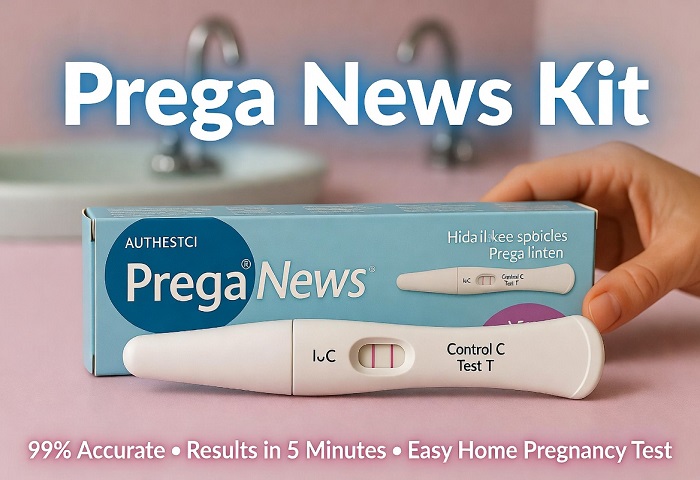
Prega News Kit Accuracy: What You Need to Know
One of the most commonly asked questions about the Prega News kit is how accurate it really is. The answer, according to manufacturer data and widespread clinical use, is that the Prega News kit offers up to 99% accuracy when used correctly after a missed period.
This level of accuracy is comparable to urine pregnancy tests conducted in a doctor’s office. However, accuracy depends heavily on proper usage. Several factors can reduce accuracy:
Testing Too Early: If you test before your body has produced enough hCG, the kit may not detect the hormone, resulting in a false negative. This does not mean you are not pregnant — only that it is too early for the test to confirm it.
Diluted Urine: Drinking large amounts of water before testing dilutes your urine and lowers hCG concentration. Always test with the first morning urine or ensure your urine has been in your bladder for at least four to five hours.
Expired or Improperly Stored Kits: An expired kit or one stored in a warm or humid environment may give inaccurate results. Always check the expiry date and store the kit properly.
Certain Medications: Fertility treatments and medications containing hCG can cause false positive results. If you are undergoing fertility treatment, consult your doctor before interpreting a Prega News kit result.
Medical Conditions: In rare cases, certain medical conditions such as ovarian cysts or a chemical pregnancy can produce low levels of hCG, leading to a faint or unexpected positive result. Always follow up a positive home pregnancy test result with a visit to a healthcare provider.
Common Mistakes to Avoid When Using the Prega News Kit
Even a reliable, well-designed product like the Prega News kit can produce incorrect results when used incorrectly. Here are the most common mistakes women make — and how to avoid them:
Using too much or too little urine: The instruction says three drops. Use exactly that. More urine can flood the strip and dilute the reaction; too little may not reach the T zone.
Reading the result outside the five-minute window: Results should be read at exactly five minutes. Evaporation lines can appear after this and resemble a faint positive, causing unnecessary alarm.
Testing too early in the menstrual cycle: If you test days before your expected period, the hCG level may simply not be high enough yet. A negative result at this stage does not rule out pregnancy. Retest after your missed period.
Using an expired kit: Always check the manufacturing date. An expired kit can give a false negative or an invalid result.
Not reading the instructions: Every Prega News kit comes with a clear instruction leaflet. Reading it takes two minutes and can make the difference between an accurate and inaccurate result.
Ignoring a faint second line: Any second line — no matter how faint — is considered a positive result. Do not dismiss it.
What to Do After Getting Your Result
If Your Result Is Positive
A positive result on the Prega News kit means hCG was detected in your urine and pregnancy is likely. Schedule an appointment with your gynecologist as soon as possible to confirm the pregnancy with a blood test or ultrasound. Early prenatal care is crucial for the health of both mother and baby. Your doctor may also advise you on folic acid supplementation and lifestyle adjustments during the first trimester.
If Your Result Is Negative But Your Period Has Not Come
A negative result does not always rule out pregnancy, especially if you tested early. If your period does not arrive within a few days of a negative result, repeat the test using first morning urine. If the second result is also negative but your period still has not started, see a healthcare provider to investigate other possible causes of a delayed period, such as stress, hormonal imbalances, or polycystic ovarian syndrome (PCOS).
If Your Result Is Invalid
An invalid result simply means the test was not completed properly. Discard the kit, purchase a new Prega News kit, and repeat the test following all instructions carefully.
Frequently Asked Questions About the Prega News Kit
Can I use the Prega News kit at night instead of the morning? Yes, you can use the Prega News kit at any time of day. However, morning urine offers the highest hCG concentration and the most accurate result. If you must test at another time of day, make sure you have not consumed excessive fluids for at least four hours beforehand.
How much does the Prega News kit cost? The standard Prega News kit is available for approximately INR 50 per unit. The advanced kit may be slightly more expensive. Both are available without a prescription at pharmacies, medical stores, and online platforms across India.
Can a Prega News kit give a false positive? False positives with the Prega News kit are rare but possible. They can occur due to hCG-containing fertility medications, recent pregnancy loss (where hCG levels may still be elevated), certain rare medical conditions, or a chemical pregnancy. Always confirm a positive result with a doctor.
How early can the Prega News kit detect pregnancy? The Prega News kit can detect hCG levels of 20 mIU/mL or above. This level is typically reached on the first day of a missed period. Some very sensitive tests may detect pregnancy slightly earlier, but for consistent reliability, testing from the day of the missed period is recommended.
Does the Prega News kit have any side effects? No. The Prega News kit is a physical diagnostic product and does not interact with your body in any way. It simply detects a hormone already present in your urine. There are no health risks associated with using it.
Can I reuse the Prega News kit? No. The Prega News kit is a single-use product. Once used, the chemical reagents on the strip are consumed and cannot be refreshed. Always use a new kit if you want to repeat a test.
Is the Prega News kit safe during breastfeeding? Yes. Since the kit only tests urine and does not introduce any substance into the body, it is completely safe to use while breastfeeding.
Prega News Kit vs. Blood Pregnancy Test: Key Differences
Many women wonder whether they should use the Prega News kit or go directly to a clinic for a blood pregnancy test. Here is a simple comparison:
The Prega News kit offers immediate, private, and inexpensive results that are highly reliable when used after a missed period. It detects hCG qualitatively — it tells you whether the hormone is present, not how much.
A blood test for hCG, conducted at a laboratory, is more sensitive and can detect pregnancy earlier — sometimes as early as 6 to 8 days after ovulation. It can also measure the exact quantity of hCG, which is useful for monitoring early pregnancy health, ruling out ectopic pregnancy, or investigating a suspected miscarriage.
For most women, the Prega News kit is a perfect first step. If the result is positive, or if symptoms persist despite a negative result, a follow-up blood test and doctor consultation is always recommended.
Conclusion: Your First Step Toward Clarity
The Prega News kit is more than just a pregnancy test — it is a tool that gives women knowledge, privacy, and agency over one of the most important moments in their lives. It is simple, affordable, reliable, and available to every woman in India without a prescription or a doctor’s visit.
Using the Prega News kit correctly means understanding when to test (first day of missed period or later), how to test (three drops of first morning urine, five-minute wait), and how to read the result (two pink lines means positive, one line means negative, even a faint line counts as positive).
No matter what result you receive, remember that the Prega News kit is a first step, not a final answer. A positive result should be confirmed by a healthcare professional. A negative result with ongoing symptoms warrants a repeat test or a doctor visit. Knowledge is power — and the Prega News kit puts that knowledge in your hands.
If you found this guide helpful, consider bookmarking it for future reference or sharing it with a friend who may need it. Your reproductive health matters, and you deserve clear, accurate, and compassionate information every step of the way.