

Introduction
Varanasi — the ancient city of light, faith, and fire — has long been the spiritual heartbeat of India. Known across centuries as Kashi and Banaras, this city resting on the sacred banks of the River Ganga is one of the oldest continuously inhabited cities in the world. Today, Varanasi news is not just about temples and rituals. It is about roads, records, revolutions in infrastructure, and a renaissance of culture that is reshaping this ancient metropolis for the modern age.
From record-breaking tourism figures and billion-rupee development projects to religious festivals drawing millions of pilgrims and the ongoing beautification of the iconic ghats — Varanasi news has become a national conversation. For residents, tourists, planners, pilgrims, and policymakers alike, keeping up with the latest updates from Varanasi is essential to understanding one of India’s most transformative cities.
This comprehensive article covers the most important and recent developments emerging from Varanasi, providing you with a detailed, fact-rich, and human account of what is happening in Kashi today.
Varanasi Tourism Breaks All Records in 2025
Perhaps the biggest piece of Varanasi news to emerge in recent months is the city’s extraordinary tourism performance. According to the Uttar Pradesh government, Varanasi welcomed a record-breaking 7.26 crore visitors in 2025 — the highest number ever registered in the city’s history. This milestone firmly placed Varanasi among the world’s leading destinations for spiritual and cultural tourism.
To put that number in perspective, this is not a modest increase. The surge reflects years of deliberate planning, massive investment, and a renewed global appetite for faith-based travel. The data is a powerful testament to how dramatically this city has transformed. Varanasi news around tourism has been consistently positive over the past several years, but 2025 marked a watershed moment.
The reasons behind this tourism boom are many. Pilgrims arrived for major religious occasions including Mahashivratri, Sawan, and New Year celebrations. A significant number of devotees also passed through Varanasi in connection with the Prayagraj Mahakumbh, making the city an integral spiritual stop on a larger pilgrimage circuit. This concentration of faith tourism from all corners of India and across the world has given the city an economic and cultural jolt that is reshaping every sector — from hospitality to handloom.
Over the past nine years, more than 46.34 crore tourists have visited Kashi, a number that would have seemed unimaginable a decade ago. Today, Varanasi news about tourism is synonymous with growth, revival, and international recognition.
Kashi Vishwanath Corridor: The Infrastructure That Changed Everything
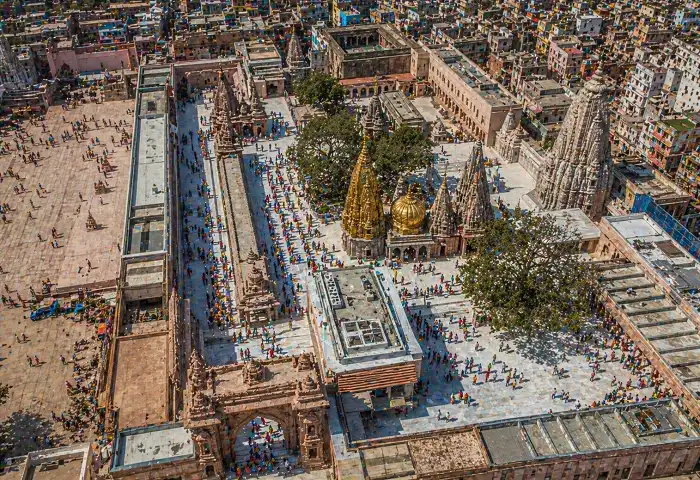
No single project has shaped recent Varanasi news more than the Kashi Vishwanath Corridor. Inaugurated in December 2021 by Prime Minister Narendra Modi, this ambitious development transformed the area around one of Hinduism’s most sacred shrines — the Kashi Vishwanath Temple — from a congested, difficult-to-navigate locality into a vast, beautifully organized spiritual complex.
Before the corridor was built, the Kashi Vishwanath Temple complex covered approximately 3,000 square feet. Today, after the landmark redevelopment, it spans an extraordinary 500,000 square feet. This is not just a physical expansion — it is a complete reimagining of how pilgrims experience the sacred site. Wider pathways, modern amenities, improved crowd management systems, and better safety infrastructure have all contributed to making the temple more accessible without compromising its religious sanctity.
The impact on visitor numbers was immediate and dramatic. In 2021, approximately 69 lakh people visited the Kashi Vishwanath Temple. By the following year, that figure had skyrocketed to 13 crore — a twentyfold increase in just two years. In terms of Varanasi news, this was nothing short of a revolution.
The Kashi Vishwanath Temple has also become a significant economic engine. The temple earned over Rs 100 crore in just ten months, a figure that speaks to both the massive increase in footfall and the renewed confidence devotees and visitors have in the system surrounding it. Plans to expand this income further, invest in staff welfare, and offer scholarship programs for pilgrims reflect a holistic approach to the temple’s role in the community.
Ganga Ghats: Beauty, Restoration, and Renewal
Another consistent thread in Varanasi news is the ongoing restoration and beautification of the city’s famous ghats — the historic stone steps that lead down to the River Ganga. These ghats are the very soul of Varanasi. They are where the city prays, mourns, celebrates, bathes, and breathes.
In recent years, the ghats have received significant attention under the Namami Gange program, the government’s flagship initiative to clean and revitalize the sacred river. Diesel and petrol boats that once polluted the Ganga have been converted to CNG — a project worth Rs 29.7 crore — significantly reducing river pollution while maintaining the centuries-old tradition of boat rides along the waterfront.
The Namo Ghat, formerly known as Khidkiya Ghat, was redeveloped at a cost of Rs 95.2 crore and inaugurated in November 2024. It now features a cafeteria, viewing platforms, and striking heritage murals that celebrate Varanasi’s cultural legacy. Plans are underway to add a helipad to the ghat and introduce water sports along the Varuna River, pushing Varanasi’s tourism offering beyond pilgrimage into adventure and premium leisure.
A jetty at Rajghat, cruise boats procured at Rs 20 crore each, and a riverfront tourism circuit featuring a walkway, viewing deck, and food court are all part of a broader effort to make the Ganga experience richer, safer, and more memorable for the millions who arrive each year seeking spiritual connection. All of this has become major Varanasi news, particularly among those who follow urban development and heritage conservation.
The daily Ganga Aarti ceremony continues to be one of the most iconic spiritual experiences available anywhere in the world. Thousands of devotees and tourists gather every evening on the banks of the river to witness this ancient ritual, and the improvements to the ghats have only deepened its power and accessibility.
Infrastructure Revolution: Roads, Bridges, and Beyond
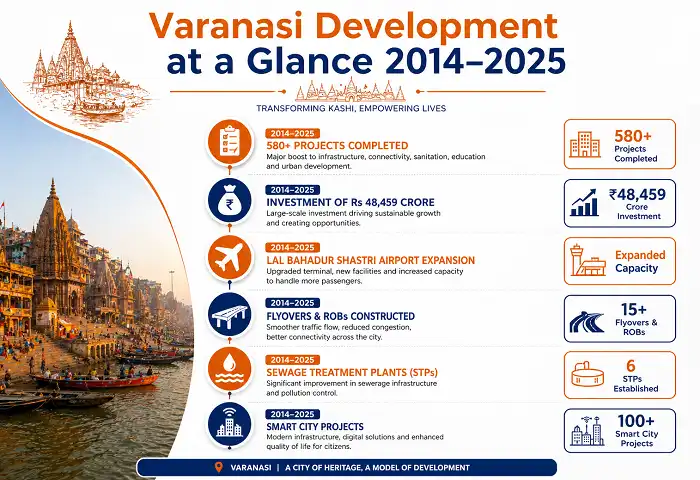
Modern Varanasi news goes far beyond temples and tourism. The city has been at the center of one of India’s most ambitious urban transformation programs, with hundreds of infrastructure projects reshaping its roads, water systems, power grids, and civic facilities.
Between 2014 and March 2025, a staggering 580 infrastructure projects were taken up across Kashi with a total investment of Rs 48,459 crore. This figure is not merely a number — it represents schools being upgraded, roads being widened, new power substations being commissioned, and flyovers eliminating the notorious traffic bottlenecks that once plagued the city.
On April 11, 2025 alone, Prime Minister Modi launched development projects worth Rs 3,880 crore in Varanasi. These included road bridges between Varanasi Ring Road and Sarnath, flyovers at Bhikharipur and Manduadih, and a highway underpass road tunnel at the Varanasi International Airport. Over Rs 980 crore was specifically allocated for flyovers, road bridges, and the airport underpass. In terms of Varanasi news for commuters and businesses, these projects are game-changing.
Two 400 Kilo-Volt and one 220 Kilo-Volt transmission substations in Jaunpur and Chandauli are improving power infrastructure across the broader region. Under AMRUT (Atal Mission for Rejuvenation and Urban Transformation), 55,000 houses were connected to sewer lines using Rs 105 crore, while a Sewage Treatment Plant with a capacity of 120 million litres per day helps keep the Ganga clean. Another STP with a capacity of 55 million litres per day is currently under construction at Rs 300 crore.
The Varanasi Smart City initiative has further accelerated urban modernization, completing 51 projects worth over Rs 1,017 crore. Under this program, the city has earned the informal title of “Brand Banaras,” reflecting how it has positioned itself not just as a pilgrimage destination but as a model of thoughtful urban renewal.
Lal Bahadur Shastri Airport: Connecting Kashi to the World
Connectivity has always been crucial to Varanasi news, and the ongoing expansion of the Lal Bahadur Shastri International Airport is one of the most consequential developments in the city’s recent history. As the gateway for millions of domestic and international visitors, the airport’s capacity and infrastructure directly affect how accessible Varanasi is to the world.
With increasing passenger traffic driven by the tourism surge, airport expansion has become a priority. New terminals, better ground handling, and improved air connectivity to major Indian and international cities are all part of the plan. For business travelers, pilgrims, and cultural tourists alike, an upgraded airport means that Varanasi news about growth and opportunity becomes genuinely actionable — the city is reachable and ready.
The ropeway connecting key parts of the city, spanning 3.75 km with five stations at a cost of Rs 644 crore, offers another dimension of modern connectivity, reducing road congestion while giving visitors a stunning aerial view of this historic cityscape.
Sarnath: Where Buddhism Meets the New Varanasi
While much of Varanasi news focuses on its Hindu spiritual heritage, the city is also home to Sarnath — one of the most sacred sites in Buddhism. It was here that Gautama Buddha delivered his first sermon after achieving enlightenment. Today, Sarnath has been redeveloped into a world-class tourism hub through a Rs 72.63 crore World Bank-supported project.
The upgrades at Sarnath have boosted not just tourism but local employment and economic activity, turning this ancient site into a living center of interfaith pilgrimage. For Jains too, Varanasi holds significance, with several important sites associated with Jain Tirthankaras receiving attention under the broader development program.
This multi-faith approach to heritage development reflects an important dimension of Varanasi news: the city is not narrowly catering to one religious tradition but is positioning itself as a universal destination for spiritual seekers of all backgrounds.
GI Tags, Local Economy, and Cultural Identity
One of the more heartening threads in recent Varanasi news is the recognition of local craftsmanship and culinary heritage through Geographical Indication (GI) tags. Over 30 local products from Varanasi and surrounding districts have received the prestigious GI designation, including the famous Thandai, red stuffed chilli, Tiranga Barfi, and several traditional textiles.
The Banarasi saree, already one of the most celebrated handloom products in India, continues to benefit from increased tourist footfall. As visitors pour into the city, they seek out authentic local experiences — and the silk weavers, potters, and sweet-makers of Varanasi are benefiting directly from this renewed interest.
The hospitality sector is also thriving. Hotels across the city have reported high capacity utilization, and new accommodation options ranging from heritage boutique properties to modern business hotels are entering the market to meet demand. Varanasi news from the business community is largely optimistic, with new investments, new restaurants, and new cultural experiences being added to the city’s offering at a steady pace.
Women’s self-help groups have also found new economic opportunity through initiatives connected to the Kashi Vishwanath Temple, including the production of traditional Laddu Prasad. Such grassroots economic inclusion adds social depth to what is otherwise a story of top-down infrastructure investment.
Environmental Varanasi News: A Cleaner Ganga
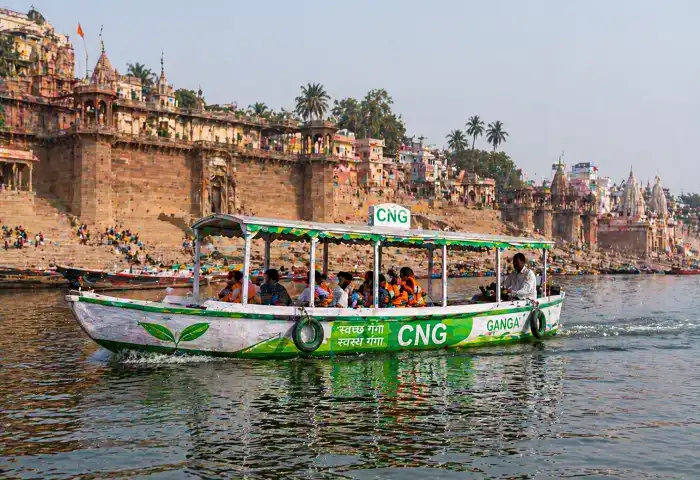
The environmental dimension of Varanasi news cannot be overlooked. For generations, the River Ganga — sacred to hundreds of millions — suffered from severe pollution. Industrial effluents, sewage discharge, and unregulated boat traffic all contributed to a water quality crisis that threatened not just the river’s ecology but its spiritual identity.
The Namami Gange program, launched in 2014 and extended through 2026, has been the cornerstone of the government’s response. Sewage treatment plants, CNG-converted boats, and massive investment in underground drainage systems have collectively begun to reverse decades of environmental damage. The Goitha Sewage Treatment Plant, inaugurated in February 2019 with a capacity of 120 million litres per day, was a landmark achievement. Under the Jal Jeevan Mission, Rs 345 crore has been allocated for rural drinking water schemes in the district.
While environmental experts note that the Ganga’s full restoration will take time and continued effort, the trajectory of Varanasi news on this front is encouraging. The river is cleaner than it was a decade ago, and that improvement is visible, measurable, and meaningful to the millions who depend on and revere it.
Education, Healthcare, and the Human Side of Varanasi News
Behind the grand infrastructure projects and tourism records lies a more human story — the story of Varanasi’s residents and their quality of life. Varanasi news from the education and healthcare sectors reflects the same comprehensive development philosophy.
Schools across the city have received upgrades in facilities, teaching resources, and digital connectivity. New power stations improve reliability of electricity supply for homes and businesses alike. Healthcare infrastructure is expanding, with new facilities being added to serve the city’s growing population and the surge of pilgrims and visitors who may require medical attention during their stays.
The Varanasi Development Authority (VDA) continues to oversee an ambitious portfolio of projects including residential colonies, community halls, and commercial complexes. The Transport Nagar project, set for completion in late 2028, will bring modern logistics and commercial infrastructure to the city, boosting trade and reducing urban congestion.
These are the stories that sometimes get lost beneath the headlines about temples and tourism figures, but they are the stories that matter most to Varanasi’s residents — and they form an essential part of the complete picture of Varanasi news today.
Varanasi in 2026: What to Watch
As we move through 2026, there are several developments that will define the next chapter of Varanasi news. The ongoing expansion of the Lal Bahadur Shastri Airport, the completion of pending Smart City projects, the progress of the water sports and river tourism circuit, and the continued growth of pilgrimage-linked economic activity all deserve close attention.
The cultural calendar of Varanasi also promises major events. Festivals like the Kashi Balloon and Boat Festival attract domestic and international visitors eager for experiences that blend the city’s ancient traditions with modern spectacle. The Dev Deepawali celebration, when thousands of diyas light up the ghats in November, remains one of the most photographed and anticipated events in all of India.
With a foundation of massive infrastructure investment, a thriving tourism economy, renewed environmental consciousness, and a cultural identity that is more globally recognized than ever, Varanasi in 2026 is a city that is simultaneously ancient and urgently contemporary.
Why Varanasi News Matters Beyond Banaras
The story of Varanasi is, in many ways, the story of India itself — a country wrestling with the relationship between tradition and modernity, between development and preservation, between economic ambition and cultural identity. Varanasi news offers a window into how this tension is being navigated in real time, with real consequences for millions of people.
The city’s transformation offers lessons for heritage cities around the world. How do you modernize without erasing? How do you welcome millions of visitors without destroying what made those visitors want to come in the first place? Varanasi has not solved these questions completely, but it has made significant and instructive progress.
Critics point to ongoing challenges: traffic congestion remains a concern despite multiple flyover projects, pollution control in the Ganga requires persistent vigilance, and the rapid growth of tourism brings its own pressures on local communities and public spaces. These too are part of honest Varanasi news, and they deserve the same attention as the success stories.
Conclusion
Varanasi news today is a story of transformation — of one of humanity’s oldest cities becoming something new while remaining, at its core, unmistakably itself. The ghats still receive the devotion of millions. The Ganga still flows with its ancient power and sacred weight. The lanes of Banaras still echo with the rhythms of silk weaving, ritual prayer, and street-side chai.
But today, those ancient lanes also connect to flyovers and smart city infrastructure. The devotees who come to bathe in the Ganga arrive through an expanded international airport. The pilgrims who visit the Kashi Vishwanath Temple move through a corridor that is both architecturally stunning and logistically seamless.
This is the Varanasi of 2026 — a city where 7.26 crore visitors came in a single year seeking something real in a world increasingly starved of it. A city where Rs 48,000 crore of investment is turning into visible, livable, experiential change. A city where Varanasi news is no longer just local news — it is India’s news, and increasingly, the world’s.
Stay tuned, because in Kashi, something meaningful is always happening.