
Bihar News in Hindi: 10 Things You Must Know
Contents
- 1 Introduction: The Heartbeat of Bihar — Every Story, Every Moment
- 2 Bihar’s New Government: A Political Chapter Begins
- 3 Education and Qualifications: A Debate That Defines Bihar Politics
- 4 BPSC 2026: A Golden Opportunity for Bihar’s Youth
- 5 Farmers’ News: Bihar Government Launches Agricultural Relief Scheme
- 6 Law and Order: Challenges on the Ground
- 7 Bihar at a Glance: Essential Facts Every Reader Should Know
- 8 Bihar’s Political Landscape: The Alliance Map
- 9 Bihar’s History and Culture: Why This State Matters
- 10 Bihar’s Economy: Agriculture, Opportunity, and the Road Ahead
- 11 Digital Bihar: How People Follow Bihar News in Hindi Today
- 12 The Role of Bihar News in Hindi in Building an Informed Society
- 13 Looking Ahead: What Bihar Needs in 2026 and Beyond
- 14 Conclusion: Stay Informed, Stay Connected with Bihar News in Hindi
Introduction: The Heartbeat of Bihar — Every Story, Every Moment
Bihar — the very name conjures the image of a vast, historically rich state that has shaped the destiny of the Indian subcontinent for thousands of years. Home to nearly 10.5 crore people spread across approximately 95,000 square kilometers in eastern India, Bihar is a land where ancient glory meets modern-day ambition, where political drama unfolds daily, and where millions of ordinary citizens wake up every morning hoping for a better tomorrow.
In today’s digital age, following Bihar news in Hindi has become second nature for every Bihari citizen — whether they live in Patna, Delhi, Mumbai, or even in a distant country. The demand for accurate, timely, and relatable news in Hindi is stronger than ever, because Hindi is the language in which Bihar thinks, feels, and expresses itself most naturally.
This article gives you a thorough, honest, and comprehensive look at what is happening in Bihar right now — covering politics, governance, education, farming, law and order, culture, and development. Whether you are a student preparing for BPSC, a farmer awaiting government relief, a political observer tracking the power shift in Patna, or simply a proud Bihari who wants to stay connected to home — this piece is written for you.
Bihar’s New Government: A Political Chapter Begins
The biggest story dominating Bihar news in Hindi in 2026 has been the dramatic change of guard at the top of Bihar’s political pyramid. On April 15, 2026, the Governor of Bihar administered the oath of office to the new Chief Minister, Samrat Choudhary, a senior BJP leader who stepped into the role following a period of intense political speculation.
This transition came after Nitish Kumar, who had governed Bihar for nearly one and a half decades, expressed his desire to move to the Rajya Sabha. His departure from the Chief Minister’s chair triggered a wave of political activity across the state, with speculation running high about who would succeed him and what direction Bihar’s governance would take.
Nitish Kumar’s tenure was defined by several flagship schemes and a focus on law and order improvement. His government launched the “Saat Nishchay” (Seven Resolutions) scheme that brought electricity, roads, and drinking water to rural Bihar. His departure leaves behind both a legacy and a question — can the next leader maintain, or better yet, surpass the pace of development?
Key Political Events of Early 2026:
Rajya Sabha Elections — March 2026: All five NDA candidates from Bihar were successfully elected to the Rajya Sabha, including Nitish Kumar himself and Nitin Nabin. This outcome reflected the NDA’s dominant position in the Bihar Legislative Assembly and confirmed the alliance’s unified strength ahead of the leadership transition.
Jan Suraj Party’s Setback: In April 2026, election strategist turned politician Prashant Kishor’s Jan Suraj Party suffered a notable blow when several senior party leaders joined the Indian National Congress at a grand function held at Sadakat Ashram in Patna. This development raised serious questions about the long-term viability of Kishor’s political experiment in Bihar.
Controversy Over New CM’s Credentials: Prashant Kishor wasted no time in attacking the new leadership. He questioned Samrat Choudhary’s academic credentials and alleged that the BJP had installed him as Chief Minister “through the back door.” He further claimed that the Bihar government would effectively be run from Delhi — a charge that the BJP firmly denied. This controversy quickly became one of the hottest topics across all Bihar news in Hindi platforms.
New Governor Appointed: Lieutenant General (Retd.) Syed Ata Hasnain was sworn in as the new Governor of Bihar on March 14, 2026, and the Raj Bhavan was officially renamed Bihar Lok Bhavan — a symbolic gesture that received wide attention.
Education and Qualifications: A Debate That Defines Bihar Politics
If there is one debate that perfectly captures the complexity of Bihar’s political culture in 2026, it is the question of educational qualifications of elected representatives. The appointment of Samrat Choudhary as Chief Minister reignited a discussion that Bihar has had periodically for decades — should there be a minimum educational standard for politicians?
In Indian democracy, the principle has always been that representation takes precedence over academic degrees, ensuring that every section of society — rural, tribal, backward, or economically disadvantaged — can participate in governance. Bihar has historically been a strong example of this philosophy. Leaders with limited formal schooling have governed the state and often done so effectively.
The most iconic example is Karpuri Thakur, lovingly called “Jannayak” (People’s Leader) by Biharis. He received his early education in Samastipur, passed matriculation from the Tirhut Academy, and then quit college in 1942 to join the Quit India Movement. He never completed his formal degree. Yet he became one of Bihar’s most celebrated Chief Ministers in the 1970s. As CM, he abolished the mandatory requirement of passing English in the matriculation examination — a decision that helped millions of students from poor backgrounds. His measure was so distinct that students who passed despite failing English became known under the “Karpuri Division.”
Current data from Bihar’s legislature shows that approximately 50 percent of MLAs in Bihar hold at least a graduate degree, while very few have limited formal education. This is a noticeable shift from earlier decades. Political analysts point out that while education is beneficial, “the path to political effectiveness is often defined more by understanding people’s needs than by holding a university degree.”
The debate is not merely academic. As Bihar’s administrative challenges grow more complex — from managing public health systems to implementing digital governance and overseeing infrastructure projects — the question of whether leaders can truly comprehend these challenges without adequate formal training becomes increasingly relevant.
BPSC 2026: A Golden Opportunity for Bihar’s Youth
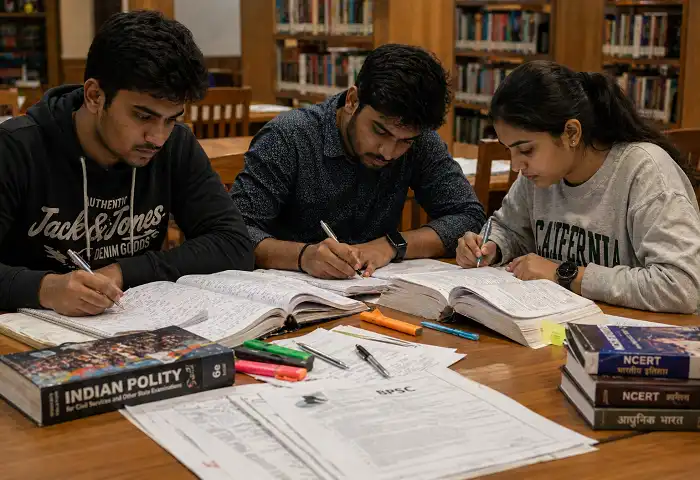
One of the most-read categories of Bihar news in Hindi among young readers is government job recruitment. And 2026 has brought some genuinely exciting news on this front.
The Bihar Public Service Commission (BPSC) officially released its Recruitment Calendar for 2026, covering 48 major recruitment examinations and processes across various government departments. For the millions of young people preparing for competitive government exams in Bihar, this calendar is nothing short of a lifeline — giving them a clear roadmap for the entire year.
Highlights of the BPSC 2026 Calendar:
BPSC TRE 4.0 — Teacher Recruitment: The fourth phase of the Teacher Recruitment Examination carries a staggering 46,585 vacancies. This is one of the largest single-round teacher recruitment drives in Bihar’s recent history and represents a massive investment in the state’s education system.
Assistant Education Development Officer (AEDO): Examinations for this critical educational administration role are also scheduled for 2026.
Assistant Prosecution Officer (APO): Another important recruitment drive aimed at strengthening the legal and prosecution machinery of the state.
Results for Earlier Exams: The calendar also provides expected timelines for results of previously conducted examinations, helping candidates plan their preparation effectively.
The release of this calendar comes at a time when Bihar’s youth are under considerable pressure. The state has one of the youngest demographic profiles in India, and the pressure on the government to create adequate employment opportunities has never been greater. These 48 recruitment drives represent a meaningful step in the right direction.
Farmers’ News: Bihar Government Launches Agricultural Relief Scheme
For a state where farming remains the backbone of the economy, agricultural news is always central to Bihar news in Hindi. March 2026 brought devastating weather to parts of Bihar — hailstorms, cyclonic winds, and unseasonal rainfall destroyed standing crops in multiple districts, leaving thousands of farming families in distress.
In response, the Bihar government launched the Krishi Input Anudan Yojana (Agricultural Input Grant Scheme) to provide direct financial assistance to affected farmers. The scheme’s key details:
Coverage: Farmers across 13 affected districts are eligible under this scheme.
Grant Structure:
- Separate per-acre grant rates for rain-fed (unirrigated) farmland
- Separate rates for irrigated agricultural land
- Special provision for horticulture (fruit and vegetable) crops
Application Deadline: Affected farmers can apply online until May 5, 2026.
This scheme reflects the Bihar government’s increasing reliance on digital platforms for welfare delivery — farmers can apply from their phones without having to visit government offices, saving time and reducing the scope for corruption.
Agricultural experts note that while the relief scheme is welcome, Bihar’s farming sector needs more structural solutions — better irrigation infrastructure, improved cold storage facilities, crop insurance penetration, and access to quality seeds and fertilizers at subsidized rates. These are conversations that Bihar news in Hindi must continue to push into the public discourse.
Law and Order: Challenges on the Ground
Maintaining law and order in a state as large and diverse as Bihar is never easy. April 2026 saw several incidents that brought the state’s crime and governance challenges under the spotlight.
The Nawada Kidnapping-Extortion Scandal: This case shocked Bihar because it involved the alleged participation of police personnel from the excise department in a kidnapping-for-ransom operation. The Jamui police acted swiftly, arresting four accused individuals including two Assistant Sub-Inspectors (ASIs) and recovering the extorted money. This case raised uncomfortable questions about accountability within the police force — an issue that is critical for restoring public trust.
Navgachiya Safety Tank Tragedy: In the Khairpur Kadwa village of Navgachchia, three laborers lost their lives when they suffocated inside a safety tank. This tragic incident highlighted the persistent dangers faced by daily wage workers in Bihar and the urgent need for stricter enforcement of workplace safety standards across the state.
Illegal Hospital Busted in West Champaran: Administration officials in Bhitaha block conducted a raid and uncovered an illegal hospital that was reportedly conducting unlawful abortions. Equipment and medicines related to illegal medical procedures were seized, the hospital was sealed, and legal proceedings were initiated against those responsible. This incident underscores the challenge of regulating the healthcare sector in rural Bihar, where unregistered clinics often operate in the absence of adequate government health infrastructure.
Each of these incidents is a reminder that while Bihar has made strides in governance and development, significant work remains on the ground — and Bihar news in Hindi plays a crucial role in holding those in power accountable.
Bihar at a Glance: Essential Facts Every Reader Should Know
For those who follow Bihar news in Hindi, understanding the state’s basic profile adds context to every story:
- Capital: Patna
- Area: Approximately 95,000 sq km
- Population: ~10.5 crore
- Lok Sabha Seats: 40 (6 reserved for Scheduled Castes)
- Rajya Sabha Members: 16
- Vidhan Sabha Members: 243
- Official Language: Hindi
- Administrative Divisions: 9 Divisions, 38 Districts, 101 Sub-Divisions, 534 Circles
- Legislature: Bicameral — Bihar Vidhan Sabha (lower house) and Bihar Vidhan Parishad (upper house)
- High Court: Patna High Court
The Governor, appointed by the President of India, is the constitutional head of the state and also serves as ex-officio Chancellor of all state universities. The Chief Minister, as head of the Council of Ministers, holds the real executive authority.
Bihar’s Political Landscape: The Alliance Map
Understanding Bihar news in Hindi requires a clear picture of who the key political players are:
National Democratic Alliance (NDA):
The ruling alliance in Bihar, comprising the Bharatiya Janata Party (BJP), the Lok Janshakti Party (Ram Vilas) — LJP-RV, and the Rashtriya Lok Janshakti Party (RLJP).
The Opposition Bloc:
Comprising the Rashtriya Janata Dal (RJD) led by the Yadav family, the Hindustani Awam Morcha, the Rashtriya Lok Janata Dal, and the Indian National Congress (INC).
Emerging Force:
Jan Suraj Party, led by former election strategist Prashant Kishor, positions itself as an alternative to both mainstream alliances. Despite facing setbacks, it continues to attract educated youth and reform-minded voters.
Bihar’s political landscape is famously complex — caste arithmetic, regional loyalties, alliance calculations, and individual charisma all play decisive roles in determining electoral outcomes.
Bihar’s History and Culture: Why This State Matters

No coverage of Bihar news in Hindi is complete without acknowledging the extraordinary historical and cultural weight that Bihar carries. This state is not just any Indian state — it is the cradle of one of the world’s oldest civilizations.
Bihar is where:
- The Buddha attained enlightenment at Bodh Gaya under the Bodhi tree
- Nalanda University — one of the greatest centers of learning in ancient history — attracted scholars from across Asia
- Chanakya wrote the Arthashastra, one of the most sophisticated political treatises ever composed
- The Magadha Empire gave rise to the Mauryan dynasty and changed the course of Indian history
- Lord Mahavira, the 24th Tirthankara of Jainism, was born in Vaishali
The state’s linguistic diversity is equally remarkable. Bhojpuri, Maithili, Magahi, and Angika are spoken across different regions, each carrying a rich oral literary tradition. Maithili is even recognized in the Eighth Schedule of the Indian Constitution as one of the country’s official languages.
Chhath Puja — the ancient festival dedicated to the Sun God — is Bihar’s grandest and most spiritually significant celebration. Observed with great devotion at riverbanks and water bodies, Chhath has now spread far beyond Bihar’s borders, celebrated with equal fervor by Bihari communities across India and around the world.
Bihar’s Economy: Agriculture, Opportunity, and the Road Ahead
Bihar’s economy is primarily agriculture-based. The fertile Gangetic plains support the cultivation of rice, wheat, maize, pulses, sugarcane, and a wide variety of vegetables and fruits. The Muzaffarpur region is particularly famous for its Shahi litchi, which has received a Geographical Indication (GI) tag and is exported internationally.
However, Bihar’s economic challenge is moving beyond subsistence agriculture toward a diversified economy that can absorb its enormous young workforce. The state has several public sector undertakings including:
- Bihar State Road Development Corporation — expanding road connectivity
- Bihar State Building Construction Corporation — government infrastructure
- Bihar State Tourism Development Corporation — promoting heritage tourism
- Bharat Wagon and Engineering Company — industrial base
For Bihar to grow economically, private investment needs to increase significantly. Improving ease of doing business, ensuring stable power supply, and developing industrial corridors connected to national highways are priorities that every government in recent memory has acknowledged — but execution has been uneven.
The development of Bodh Gaya, Rajgir, Nalanda, and Vaishali as world-class tourist destinations holds enormous promise. These sites attract Buddhist pilgrims and heritage tourists from Japan, Korea, Thailand, Sri Lanka, and beyond. Investment in hospitality, connectivity, and cultural infrastructure around these sites could generate thousands of jobs.
Digital Bihar: How People Follow Bihar News in Hindi Today
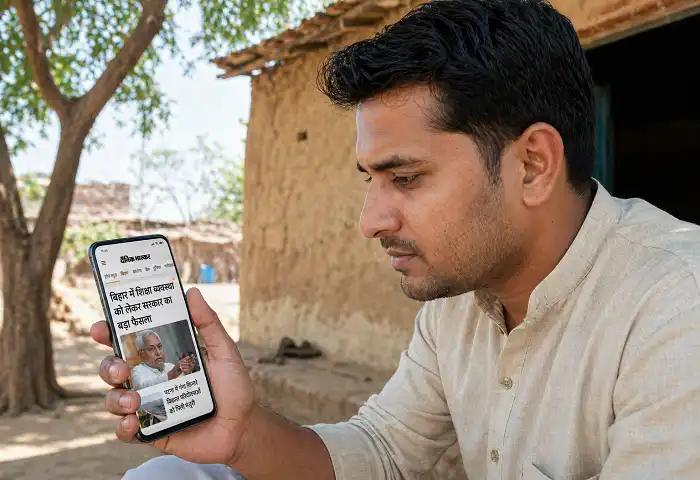
The way Biharis consume news has changed dramatically. A decade ago, the morning newspaper was the primary source of information. Today, Bihar news in Hindi is consumed through multiple digital channels simultaneously — smartphones, news apps, YouTube channels, and social media platforms.
Major news organizations like Aaj Tak, Amar Ujala, India TV, TV9 Bharatvarsh, and ETV Bharat operate dedicated Bihar desks that provide 24/7 coverage in Hindi. Alongside these established outlets, a new generation of independent digital journalists and YouTube news creators has emerged, offering grassroots reporting that mainstream media sometimes misses.
The reasons behind the growing appetite for Bihar news in Hindi are telling:
Bihari Diaspora: Millions of Biharis living and working outside their state — in Delhi, Mumbai, Punjab, Gujarat, and abroad — rely on Hindi-language news platforms to stay connected with their home state.
Rural Penetration of Smartphones: Internet connectivity has reached villages across Bihar, and farmers, students, and daily wage workers are increasingly consuming news through their phones in Hindi — their most comfortable language.
Political Consciousness: Biharis are among the most politically aware citizens in India. Elections in Bihar are watched nationally because they are competitive, unpredictable, and caste-sensitive. This drives constant demand for political news and analysis.
Job Seekers: With BPSC and BSSC examinations being fiercely competitive, tens of thousands of young people monitor Bihar news in Hindi daily for recruitment notifications, exam date updates, and result announcements.
The Role of Bihar News in Hindi in Building an Informed Society
Free press and informed citizenry are the twin pillars of democracy. Bihar news in Hindi is not just about reporting events — it serves a deeper social function. It amplifies the voices of farmers who have lost crops to floods. It exposes illegal hospitals operating in remote villages. It holds police officers accountable for extortion. It celebrates the achievements of Bihar’s students who crack national examinations against the odds.
When a scheme like the Krishi Input Anudan Yojana is launched, it is the Hindi media that spreads awareness to farmers in remote districts who may not have internet access or English-language literacy. When a tragedy like the Navgachchia safety tank deaths occurs, it is the local Hindi reporter who ensures that the story reaches the Chief Minister’s desk and generates administrative response.
Bihar has a proud tradition of courageous Hindi journalism. From the freedom movement era to the present day, journalists writing and broadcasting in Hindi have been at the forefront of holding power accountable. In an era of misinformation and paid news, maintaining the integrity of Bihar news in Hindi is a responsibility that every news organization and every reader must take seriously.
Looking Ahead: What Bihar Needs in 2026 and Beyond
As Bihar moves through 2026 under new political leadership, the expectations are immense. The state’s people have been patient through decades of underdevelopment, and while significant progress has been made — particularly in roads, electricity, and law and order — much remains to be done.
Here is what Bihar genuinely needs:
Quality Education at Scale: The BPSC TRE 4.0 drive with 46,585 teacher vacancies is encouraging, but Bihar needs not just more teachers — it needs better-trained teachers, modernized school infrastructure, and a curriculum that prepares students for the 21st century economy.
Healthcare Reform: Outside Patna and a few district headquarters, healthcare in Bihar remains severely inadequate. The illegal hospital busted in West Champaran is a symptom of a larger problem — when people cannot access affordable, legitimate healthcare, they turn to quacks and unregistered clinics.
Agricultural Modernization: The Krishi Input Anudan Yojana offers temporary relief, but Bihar’s farmers need long-term solutions — better irrigation, crop insurance, access to markets, and protection from climate-related disasters.
Industrial Investment: Bihar needs to attract private investment in manufacturing, agro-processing, textiles, and technology. The state’s large young population is both its greatest asset and its biggest challenge — employed, these young people can transform Bihar’s economy; unemployed, they represent a serious social and political risk.
Governance Accountability: The Nawada kidnapping case, involving police personnel, is a reminder that strengthening internal accountability mechanisms in government institutions is non-negotiable.
Conclusion: Stay Informed, Stay Connected with Bihar News in Hindi
Bihar is a state that never sits still. From the halls of Patna’s Vidhan Sabha to the fields of Muzaffarpur, from the tech-savvy youth of Patna to the tribal communities celebrating Sarhul in their villages — every part of Bihar has a story worth telling and a voice worth hearing.
Bihar news in Hindi is the bridge that connects all these stories — that ties the diaspora to their roots, that gives the farmer a platform, that gives the student information, and that gives the citizen the power to hold their leaders accountable.
As Bihar enters this new political era under a new Chief Minister, the state stands at an inflection point. The decisions made in 2026 — on education policy, on agricultural support, on industrial investment, and on law and order — will shape Bihar’s trajectory for years to come. Those who follow Bihar news in Hindi regularly are not passive observers. They are active stakeholders in the future of one of India’s most historic and significant states.
Stay informed. Stay engaged. Stay proud of Bihar.