

Introduction
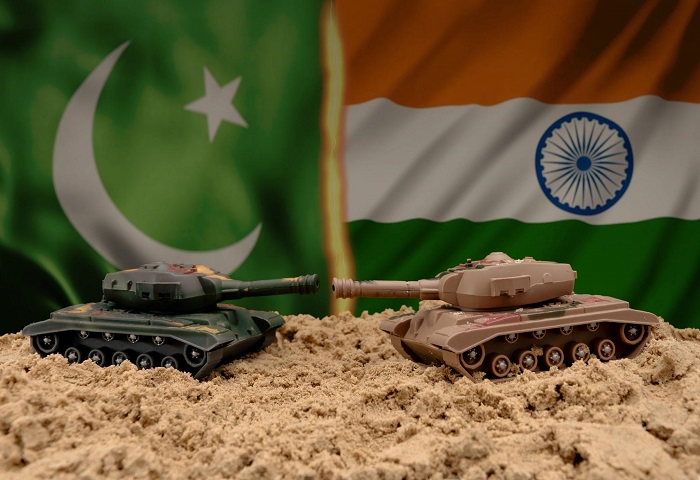
The india pakistan war news of 2025 shook the entire world. Two nuclear-armed neighbors — locked in decades of rivalry — plunged into their most serious military confrontation since 1971. From the massacre of tourists in Kashmir’s Pahalgam valley to supersonic missile strikes deep inside Pakistani territory, from drone battles over the Line of Control to a fragile ceasefire announced on social media by the US President, the events of May 2025 rewrote South Asia’s security landscape in just four days. If you have been following india pakistan war news closely, this is the most complete breakdown you will find — covering the trigger, the conflict, the ceasefire, the diplomatic fallout, and the dangerous road that lies ahead.
What Triggered the India Pakistan War? The Pahalgam Attack
To understand india pakistan war news properly, you must start with the attack that started everything. On April 22, 2025, five armed gunmen stormed a peaceful tourist area near Pahalgam in Indian-administered Jammu and Kashmir and killed 26 civilians — most of them Hindu tourists. Witnesses reported that the attackers singled out victims by religion, forcing them to identify themselves before opening fire. It was a calculated act designed not just to kill, but to fracture India’s social fabric from within.
The Resistance Front, a militant faction operating under the shadow of Lashkar-e-Taiba — a Pakistan-based group designated as a terrorist organization by the United Nations — initially claimed responsibility. India’s government held Pakistan directly responsible for sponsoring the network behind the massacre. Pakistan denied any involvement and offered to cooperate with an international investigation, but New Delhi was done waiting.
Within 48 hours of the Pahalgam attack, the india pakistan war news cycle exploded. India cancelled all Pakistani visas, ordered Pakistani nationals out of the country, expelled Pakistani military advisors from New Delhi, and announced the suspension of the Indus Waters Treaty of 1960 — a landmark water-sharing agreement that had survived three previous India-Pakistan wars. Prime Minister Narendra Modi’s message to Islamabad was blunt and direct: “Blood and water cannot flow together.”
Pakistan responded in kind. Islamabad suspended the Simla Agreement, closed its airspace to Indian flights, severed all trade ties, and expelled Indian diplomats. Armed skirmishes began along the Line of Control on April 24. The stage was fully set for war, and by the first week of May, that war had arrived.
Operation Sindoor: India Crosses the Line
The most pivotal event in all recent india pakistan war news came in the early morning hours of May 7, 2025. Between 1:05 AM and 1:30 AM Indian Standard Time, India launched a sweeping military campaign codenamed Operation Sindoor — striking nine sites across Pakistan and Pakistan-administered Azad Kashmir. All nine targets were described by New Delhi as terrorist infrastructure belonging to Jaish-e-Mohammed and Lashkar-e-Taiba.
This was not a symbolic strike. According to analysts at the Observer Research Foundation, Operation Sindoor was the deepest and most extensive military campaign India had conducted since the 1971 India-Pakistan war. More significantly, it was the first time since 1971 that India struck across the internationally recognized border — not merely across the disputed Line of Control. That distinction matters enormously in the india pakistan war news context: crossing the settled international boundary is a far more serious act than skirmishing along the LOC.
The weapons India deployed told a story of military modernization. BrahMos supersonic cruise missiles — traveling at nearly three times the speed of sound — gave Pakistani defenders almost no reaction time. Loitering munitions, precision-guided bombs, and kamikaze drones were also used. India’s indigenous Akashteer air defense systems and S-400 surface-to-air missile batteries were repositioned to forward bases at Adampur, Bhuj, and Bikaner to provide cover during the operation.
The results were significant. Jaish-e-Mohammed’s chief Maulana Masood Azhar acknowledged that 10 members of his own family and four of his close aides were killed when Indian strikes hit the group’s headquarters in Bahawalpur. India claimed over 100 militants were eliminated across the nine sites. Pakistan disputed these numbers, saying 31 of its civilians died in what it called strikes on populated areas and mosques. As is standard in any india pakistan war news cycle, both sides presented sharply different versions of events.
The scale of the aerial engagement was staggering. At least 125 fighter jets from both sides were reportedly operating at standoff ranges during the first night of strikes — making it the largest aerial engagement involving fourth-generation fighters anywhere in the world in recent years.
Pakistan Hits Back: Operation Bunyan-un-Marsoos
Pakistan’s military response was fierce and immediate. Within hours of India’s first strikes, Pakistan’s army launched the heaviest mortar attack on Poonch in the Jammu region in over 50 years, destroying hundreds of homes and killing 16 civilians. Over the next three days, Pakistani missiles and drones struck Indian military infrastructure in 11 cities, targeting air bases, radar systems, and command centers.
On May 10, Pakistan formally launched its retaliatory campaign, codenamed Operation Bunyan-un-Marsoos, hitting India’s Nur Khan air base near Rawalpindi, Murid air base, and Rafiqui air base in Punjab. The india pakistan war news reached its most terrifying moment on the night of May 9–10, when Pakistan fired four ballistic missiles directly at New Delhi — all four were successfully intercepted by India’s air defense systems before reaching their target.
Pakistan’s Nuclear Command Authority was reportedly convened on May 9. Analysts interpreted this as deliberate nuclear signaling — a message to India, the US, and the world that Islamabad was prepared to consider its most extreme options if the conflict escalated further. President Donald Trump later confirmed the gravity of the situation, stating that the conflict could have become a “bad nuclear war” if the ceasefire had not come when it did.
The india pakistan war news also recorded history’s first confirmed drone battle between two nuclear-armed nations. Both sides deployed unmanned aerial vehicles on a massive scale, intercepting and launching drones across the border throughout the four-day conflict. India’s indigenous air defense platforms proved effective, shooting down large numbers of Pakistani UAVs even after the ceasefire was announced.
The Ceasefire That Almost Did Not Hold
After four days of relentless cross-border warfare, both nations agreed to a ceasefire effective from 5:00 PM Indian Standard Time on May 10, 2025. The Directors General of Military Operations of both countries communicated by hotline and committed to stopping all military action on land, in the air, and at sea.
US President Donald Trump was first to announce the agreement — via social media — claiming America had actively brokered the deal. Secretary of State Marco Rubio and Vice President JD Vance had worked around the clock speaking with Indian and Pakistani leadership in the final hours. Pakistan’s Prime Minister Shehbaz Sharif thanked the United States. India flatly refused to acknowledge any foreign role, insisting — in keeping with its long-standing position — that the ceasefire was reached directly between the two countries.
But even as the india pakistan war news cycle shifted to ceasefire coverage, the peace immediately frayed. Within hours of the agreement, explosions were heard across Srinagar and Jammu in Indian-administered Kashmir. India’s Foreign Secretary Vikram Misri accused Pakistan of “repeated violations” of the ceasefire. Pakistan’s Foreign Ministry blamed India. Both sides had agreed on paper to stop — but neither trusted the other enough to actually stand down completely.
The ceasefire has, broadly, held since May 10. But it remains fragile, conditional, and contested. India has maintained heightened military readiness along the border since. Pakistan has repositioned its air assets further inland, reflecting a recalculation of its vulnerability to future Indian strikes.
Who Won the India Pakistan War?
Every major india pakistan war news outlet has grappled with this question, and the honest answer is complicated.
India achieved significant military objectives: terrorist camps were destroyed, militant leadership was killed, Pakistani air defense systems were degraded, and India demonstrated the operational capability to strike deep inside Pakistan using entirely domestically developed or assembled platforms. Prime Minister Modi declared a transformed security doctrine — any future terrorist attack on Indian soil linked to Pakistan would be treated as an act of war, erasing the distinction between terrorists and their state sponsors.
Pakistan, however, extracted diplomatic gains from the conflict. The involvement of the United States in brokering the ceasefire placed India and Pakistan on equal footing in international eyes — something New Delhi found deeply frustrating, given that India sees itself as a major global power and Pakistan as a far smaller, weaker state. Pakistan also successfully internationalised the Kashmir issue, bringing it back onto the global agenda after years of India insisting it was a strictly bilateral or internal matter.
International analysts were largely split. Some viewed Operation Sindoor as a decisive Indian military victory. Others pointed out that India lost aircraft during the conflict and that the “spectre of nuclear war” ultimately constrained what India could accomplish. The Financial Times noted that the ceasefire gave Pakistan a “diplomatic upper hand.” Pakistan promoted its army chief to Field Marshal. India found itself equated with a country it considers a terror-sponsoring rogue state. The india pakistan war news outcome, in strategic terms, was widely described as a draw — with both sides claiming victory and neither fully achieving its objectives.
The Global Ripple Effect
The india pakistan war news triggered consequences far beyond South Asia. The reported downing of Indian Rafale jets by Pakistani J-10C fighters — China-built aircraft — sent shockwaves through the global arms market. Indonesia, which had placed orders for French Rafale jets, announced it was reconsidering its procurement and evaluating the Chinese J-10C as an alternative. Dassault Aviation’s share price dipped. In China, videos mocking India over the Rafale losses went viral, attracting millions of views.
The China angle added a new dimension to the india pakistan war news story. Operation Sindoor made clear that Chinese military technology — fighters, electronic warfare systems, missile components — was directly enabling Pakistan’s military capabilities. For Western governments and defence planners, this underlined the degree to which China and Pakistan represent a combined strategic challenge for India and its partners.
India’s suspension of the Indus Waters Treaty remained in force into 2026, with satellite imagery showing India moving rapidly on hydropower projects previously restricted by the treaty. Pakistan called any tampering with its water supply an act of war. At least 80 percent of Pakistan’s agricultural sector depends on rivers covered by the treaty. The water dimension of the india pakistan war news continues to simmer as a slow-burning crisis beneath the more dramatic military headlines.
India-Pakistan Diplomacy in 2026: An Unexpected Turn
The most surprising chapter in the evolving india pakistan war news story has been Pakistan’s unexpected rise as a global diplomatic actor in 2026. Pakistan served as the lead mediator in the US-Israel war against Iran, facilitating a temporary ceasefire announced on April 7, 2026. President Trump and world leaders praised Islamabad’s role. India watched this development with visible discomfort.
New Delhi had spent almost a year after the May 2025 conflict trying to build a global consensus that Pakistan is an unreliable, terrorism-sponsoring state that should not be trusted by other governments. That message found little traction. Instead, Pakistani Prime Minister Shehbaz Sharif was being celebrated as a peacemaker on the world stage, and India found itself diplomatically sidelined in ways its officials had not foreseen when Operation Sindoor was launched.
There were small diplomatic thaws. On December 31, 2025, India’s Foreign Minister S. Jaishankar shook hands with Pakistan’s National Assembly Speaker Ayaz Sadiq at a funeral gathering in Dhaka — the first visible public engagement between senior officials of both countries since the war. Analysts noted that such a gesture could not have happened without explicit clearance from Prime Minister Modi. Whether it signals genuine movement toward dialogue, or is merely the minimum courtesy required at a third country’s state function, remains an open question.
The Council on Foreign Relations, in its 2026 annual risk survey, listed another India-Pakistan armed confrontation as moderately likely, noting that the fundamental drivers of conflict — cross-border terrorism, Kashmir, water disputes, and a near-total absence of political trust — remain entirely unresolved.
The Kashmir Question: Still Unresolved After 77 Years
No reading of india pakistan war news makes sense without understanding the Kashmir dispute that underlies it. When Britain partitioned the Indian subcontinent in 1947, the princely state of Jammu and Kashmir became an immediate flashpoint. India and Pakistan have fought four wars since 1948, three of them over Kashmir. The Line of Control that divides Indian-administered from Pakistan-administered territory was never meant to be a permanent border — it is a ceasefire line, not a political settlement.
India claims the entire region. Pakistan claims the Muslim-majority Kashmir Valley. An armed separatist insurgency has simmered in Indian-administered Kashmir since 1989, with militant groups — many of them supported at various points by Pakistan’s intelligence services — carrying out attacks against Indian security forces and civilians. India revoked Jammu and Kashmir’s special constitutional status in 2019, a move Pakistan condemned as illegal and which sharply escalated tensions.
The Pahalgam attack of April 2025 was not an isolated event — it was the latest eruption of a conflict with roots stretching back nearly eight decades. Until the political question of Kashmir is genuinely addressed, the india pakistan war news cycle will continue. Each new attack, each new military operation, each new ceasefire is a chapter in the same unfinished story.
What Happens Next? The Risk of Another India Pakistan War
The india pakistan war news of 2025 established a dangerous new normal. India’s declared doctrine — that any future terrorist attack traceable to Pakistani soil will be treated as an act of war — means that the threshold for military action has been permanently lowered. Pakistan has responded by recalibrating its military posture: repositioning air assets away from the Indian border, investing heavily in electronic warfare, drone swarms, and hypersonic missile programs.
Both countries are, in the words of Chatham House analysts, “moving up the escalation ladder.” The rules of engagement have shifted. Each side is now prepared to strike beyond Kashmir into the other’s heartland. The absence of any serious bilateral dialogue — the last substantive peace talks collapsed after the 2008 Mumbai attacks — means there is no institutional shock absorber in place if the next crisis erupts.
The nuclear dimension looms over everything. Pakistan’s nuclear doctrine has long relied on the assumption that the threat of nuclear weapons would deter Indian conventional military operations. Operation Sindoor shattered that assumption. India demonstrated that it would conduct large-scale conventional strikes despite Pakistan’s nuclear arsenal. This forces Pakistan into an increasingly uncomfortable position: either accept India’s new assertiveness, or recalibrate its nuclear posture in ways that increase the risk of genuine catastrophe.
Experts who study the india pakistan war news landscape say the next confrontation is not a matter of if, but when. Back-channel communications between intelligence services and national security advisers — the informal plumbing of India-Pakistan crisis management — will be critical to preventing any future spark from becoming a nuclear inferno.
Conclusion: Why India Pakistan War News Matters to the World
The india pakistan war news is not a regional story. It is one of the most consequential geopolitical narratives on the planet. Two nuclear powers, sharing a contested border, fueled by competing nationalisms, divided by religion, history, and territorial claims, with China deeply embedded on one side and the US reluctantly engaged on both — this is not a conflict that stays neatly within South Asia’s borders.
Operation Sindoor was a watershed. The 2025 india pakistan war changed doctrine, transformed military postures, unsettled global arms markets, and forced the United States back into a crisis manager role it had spent years trying to avoid in the region. The ceasefire holds — for now. But the underlying drivers of conflict remain entirely intact. Kashmir is not resolved. Cross-border terrorism has not stopped. The Indus Waters Treaty remains suspended. Trust between New Delhi and Islamabad is effectively zero.
Anyone following india pakistan war news in 2026 must understand that what they are watching is not the end of a story. It is an intermission. The next chapter is already being written — in Islamabad’s military planning rooms, in New Delhi’s national security council, along the Line of Control where soldiers still face each other across a heavily armed, nuclear-shadowed divide. The world would do well to pay close attention.