

Introduction
Every time plane crash news breaks across headlines, millions of people stop scrolling. Fear grips them — and questions flood in. What happened? Could it have been prevented? Is flying still safe?
Whether you just caught a breaking aviation story or you’re researching airline safety for an upcoming trip, this guide cuts through the noise. We’ll cover the latest plane crash news, the real science behind air disasters, what investigation agencies actually do, and the facts that put risk into honest perspective.
The goal isn’t to scare you. It’s to make you informed.
The Reality Behind Plane Crash News Headlines
News coverage of aviation accidents tends to be intense and immediate — and for good reason. A plane crash is dramatic, tragic, and statistically rare enough to shock the public every time it happens.
But here’s what the data actually shows:
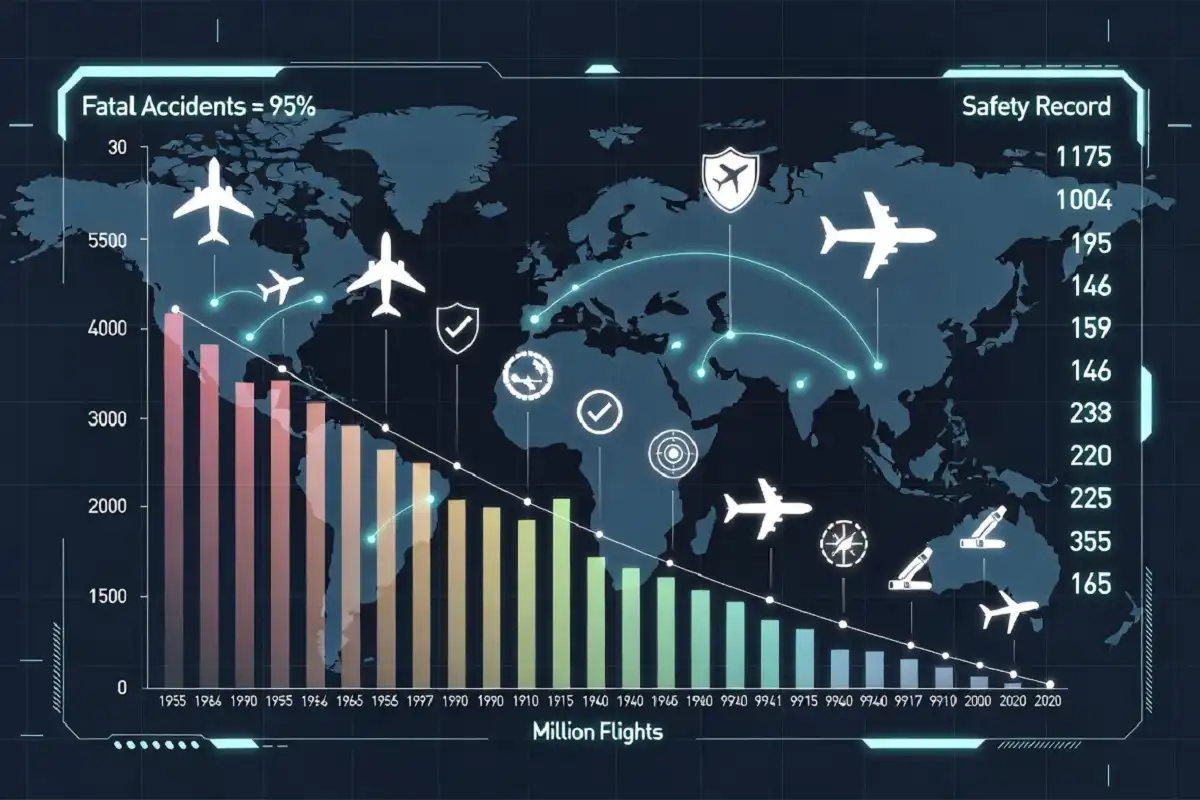
- According to the International Air Transport Association (IATA), 2023 recorded just 0.11 fatal accidents per million flights globally.
- Commercial aviation has become exponentially safer over the past five decades.
- Most years, road accidents kill more people in a single week than aviation does in an entire year.
This doesn’t minimize tragedies. It does, however, put plane crash news in the context it deserves.
Major Plane Crash News Events: 2024–2025 Overview
What Dominated Aviation Headlines
The past 18 months saw several notable incidents that drove global plane crash news cycles:
Jeju Air Flight 2216 (South Korea, December 2024) A Jeju Air Boeing 737-800 crash-landed at Muan International Airport, resulting in one of South Korea’s worst aviation disasters. Investigators pointed to a possible bird strike affecting landing gear deployment. The crash re-ignited international scrutiny of runway overrun safety systems.
Azerbaijan Airlines Flight 8243 (December 2024) An Embraer 190 operated by Azerbaijan Airlines came down near Aktau, Kazakhstan. The incident raised serious questions about airspace safety and mid-flight incidents over conflict-sensitive zones.
Nepal Aviation Incidents (Ongoing) Nepal continues to have a disproportionate share of regional aviation incidents due to challenging Himalayan terrain, aging aircraft fleets, and limited infrastructure — making it a persistent subject in global plane crash news.
Common Threads Across Recent Crashes
- Aging aircraft fleets
- Bird strikes and environmental hazards
- Pilot error and crew fatigue
- Air traffic control miscommunication
- Geopolitical airspace risks
How Plane Crashes Are Investigated
The Role of Black Boxes
Two devices are recovered in virtually every major crash investigation:

- Flight Data Recorder (FDR) — Tracks altitude, airspeed, heading, and thousands of other parameters.
- Cockpit Voice Recorder (CVR) — Captures audio from the cockpit during the final hours of flight.
These are housed in titanium-encased, crash-resistant, heat-resistant units — designed to survive almost anything.
Who Investigates?
- NTSB (USA) — National Transportation Safety Board
- AAIB (UK) — Air Accidents Investigation Branch
- BEA (France) — Bureau d’Enquêtes et d’Analyses
- ICAO — International Civil Aviation Organization (global oversight)
Investigations can take months to years before a final report is released. Headlines often speculate well before the facts are confirmed — which is one reason plane crash news coverage deserves critical reading.
The Most Common Causes of Aviation Accidents
Understanding the causes helps evaluate plane crash news more accurately. Aviation authorities consistently identify these major factors:
1. Human Error (Approximately 50–70% of Accidents)
- Pilot error during takeoff or landing
- Miscommunication between crew and ATC
- Fatigue or decision-making under stress
2. Mechanical Failure
- Engine malfunctions
- Hydraulic system failures
- Structural metal fatigue (especially in older aircraft)
3. Weather and Environmental Hazards
- Wind shear and microbursts
- Icing on wings
- Volcanic ash clouds
- Bird strikes (more dangerous than most people realize)
4. Air Traffic Control Errors
- Runway incursion clearances
- Incorrect altitude assignments
- Communication breakdowns
5. Geopolitical and Security Factors
- Missile strikes in conflict zones
- Terrorism (though significantly reduced post-9/11)
Aviation Safety Improvements: The Bigger Picture
For context, the aviation industry has transformed its safety record through relentless iteration:
- TCAS (Traffic Collision Avoidance Systems) now alert pilots of nearby aircraft automatically.
- GPWS (Ground Proximity Warning Systems) have virtually eliminated controlled-flight-into-terrain accidents.
- FOQA (Flight Operational Quality Assurance) programs analyze millions of data points per flight to catch risk before it becomes disaster.
- Stricter crew rest regulations now apply across most major aviation markets.
If you’re tracking developments in how infrastructure and public safety news intersect, you may also be interested in how India-Pakistan tensions affect airspace and flight routes — a topic with direct implications for aviation safety in South Asia.
Plane Crash Survival: What the Data Reveals
The notion that no one survives plane crashes is a dangerous myth. Here’s what research and accident databases show:
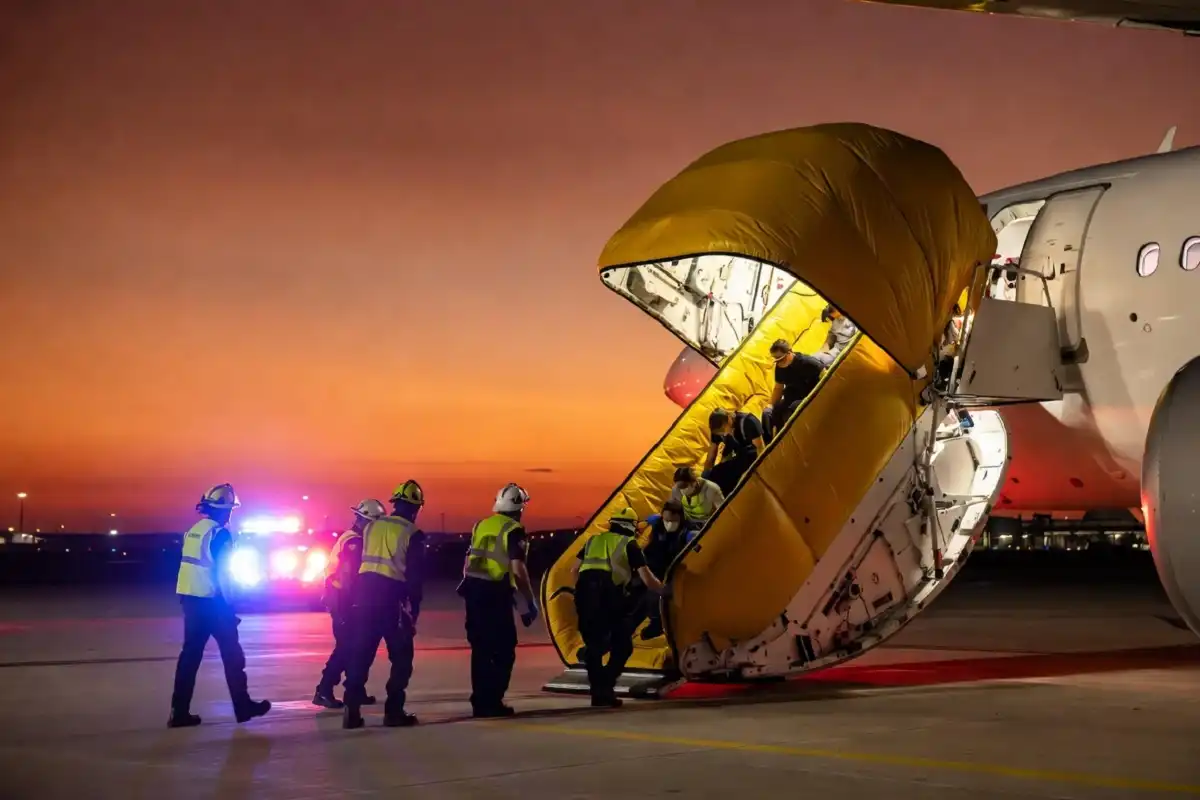
- The FAA and NTSB have studied hundreds of survivable crashes and found that over 95% of passengers involved in accidents survive.
- The most dangerous phases of flight are takeoff and landing — but also the most survivable because aircraft are close to the ground and emergency services respond faster.
- Seat position matters: seats within a few rows of emergency exits consistently show better survival outcomes.
Survival Tips Based on Real Data
- Count the rows to the nearest exit when boarding.
- Keep your seatbelt fastened even when the light is off.
- Memorize the safety card — most survivors say it helped.
- Wear natural fibers (less flammable than synthetics).
- Stay low in smoke-filled conditions.
How to Follow Plane Crash News Responsibly
In the age of social media, plane crash news spreads — and distorts — fast. Here’s how to stay informed without falling into misinformation traps:
Trusted Sources for Aviation Accident News
- Aviation Safety Network (ASN) — One of the most comprehensive databases of aviation accidents worldwide.
- IATA Safety Reports — Official industry statistics and annual safety reviews.
- National investigation agencies (NTSB, AAIB, BEA) for official preliminary and final reports.
Red Flags in Crash Coverage
- Speculation about cause within hours of a crash
- Footage shared without confirmation of source
- Casualty numbers that change dramatically within hours
- Unnamed “aviation experts” with no verifiable credentials
For broader context on how major news events unfold and get reported in India, this resource on tracking live news and updates offers practical guidance on filtering signal from noise.
The Emotional Weight of Aviation Disasters
Beyond statistics and investigations, plane crash news carries a profound human dimension. Each incident involves families waiting for word, communities in shock, and nations grieving together.
Aviation disasters have historically triggered sweeping policy changes:
- Tenerife (1977) — Led to standardized aviation communication protocols worldwide.
- Valujet Flight 592 (1996) — Overhauled cargo fire safety regulations.
- Air France 447 (2009) — Transformed pilot training for high-altitude stall recovery.
The pattern is consistent: tragedy, investigation, reform, and incremental progress. This is why aviation, despite the dramatic headlines, remains the safest form of long-distance travel in history.
On a similar note, just as urban disaster preparedness matters — like understanding Mumbai’s monsoon rains and infrastructure resilience — aviation safety requires continuous investment in systems and human training.
India’s Aviation Safety Record: A Close Look
India’s aviation sector has grown exponentially — making plane crash news involving Indian carriers or airports particularly impactful domestically.

Key facts about Indian aviation safety:
- The Directorate General of Civil Aviation (DGCA) oversees airline licensing, pilot certification, and accident investigations.
- India has seen a significant reduction in fatal accident rates over the past two decades, in parallel with massive fleet modernization.
- IndiGo, Air India, and other major carriers have collectively logged billions of flight hours with improving safety records.
- The 2010 Air India Express crash at Mangalore and the 2020 Kozhikode tabletop runway overrun remain landmark cases driving runway safety reforms across Indian airports.
Regional connectivity schemes like UDAN have brought more aircraft into tier-2 and tier-3 city airports — making ongoing safety oversight even more critical. This connects directly to broader infrastructure development being tracked across Indian cities, including Gurugram’s rapidly evolving urban landscape and how growth intersects with public safety systems.
For those tracking regulatory and industrial developments, the story of Tata Motors and India’s industrial pivot offers useful context — Tata Group’s aerospace and defense arms play a growing role in India’s aviation ecosystem.
Frequently Asked Questions (FAQ)
1. What should I do immediately when I see plane crash news?
Wait for confirmation from official sources before sharing. Check aviation databases like the Aviation Safety Network or follow statements from the relevant national investigation agency. Avoid spreading unverified casualty counts or causes.
2. Is flying still safe despite recent plane crash news?
Yes. Statistically, flying remains the safest form of long-distance travel. Fatal accident rates have declined consistently. One high-profile plane crash news story can distort perception — always look at data, not just headlines.
3. How long does a plane crash investigation take?
Preliminary reports are usually released within 30 days. Full investigations — covering causes, contributing factors, and safety recommendations — can take 12 to 36 months, depending on complexity.
4. What causes most modern plane crashes?
Human error accounts for the majority (50–70%), followed by mechanical failures, weather hazards, and in rare cases, geopolitical or security factors. Each plane crash news event typically involves a combination of factors.
5. Are certain aircraft models more prone to crashes?
Aircraft type does factor into risk, but airline maintenance practices, route conditions, and operational procedures matter more. No mainstream commercial aircraft currently in service has a systematically poor safety record when operated under proper oversight.
6. Where can I find reliable, real-time plane crash news?
The Aviation Safety Network, FlightAware, official NTSB or ICAO statements, and major wire services (Reuters, AP) are the most reliable starting points for accurate, real-time plane crash news.
Conclusion: Stay Informed, Stay Grounded
Plane crash news will always generate shock and urgent attention — that’s human nature. But behind every headline is a complex reality of engineering, human judgment, environmental conditions, and systemic factors that rarely fit into a two-minute news segment.
The facts are clear: aviation is safer than it has ever been, and it continues to improve through data-driven investigation and reform. Understanding how crashes happen and how they are investigated makes you a more informed news consumer — and a less anxious traveler.
Stay curious. Read from authoritative sources. And the next time a plane crash news story breaks, give it the time and verification it deserves before forming a conclusion.
For more in-depth coverage of high-impact news stories across India and the world, explore our other investigative features on topics ranging from urban safety in Kanpur to critical environmental updates from the Aravalli Hills.